
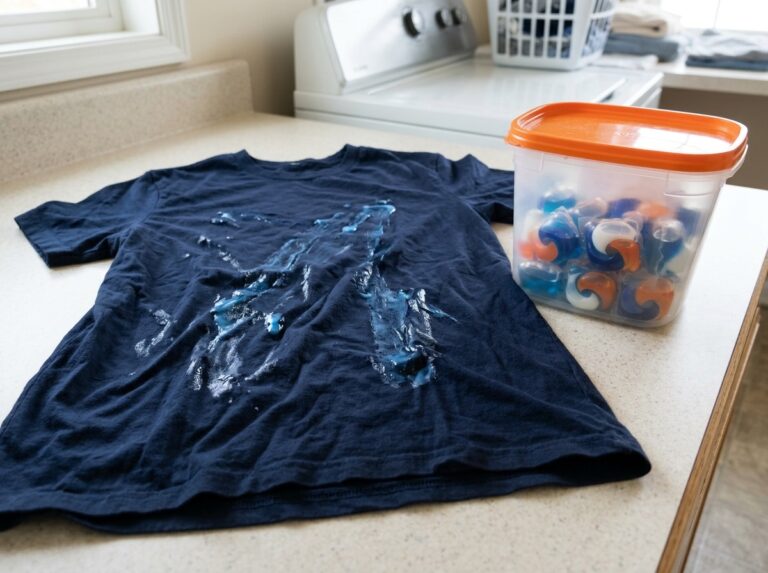
There’s something particularly frustrating about pulling ‘clean’ laundry out of the machine only to find it covered in blue streaks, white chalky residue, or greasy-looking patches. The irony of cleaning products leaving stains is real, and it happens more often than most people realize.
Detergent stains are different from most fabric stains because the culprit is the product meant to prevent stains. Understanding exactly what causes them, how to identify them, and how to remove them properly from every color fabric is what this guide is about.
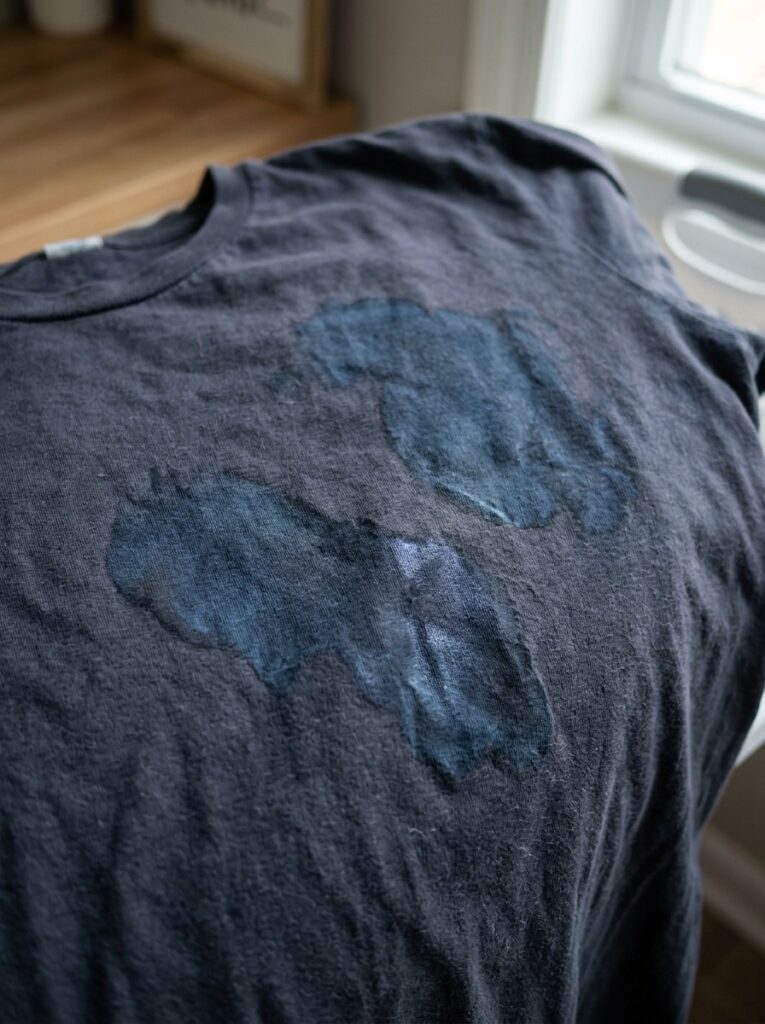
Table of Contents
What Do Detergent Stains Look Like?
Detergent stains don’t all look the same. The appearance depends on the type of detergent and the cause:
- Blue or purple streaks: classic sign of liquid detergent with synthetic dye. The dye transfers to the fabric before being diluted by water. Most visible on light-colored clothes.
- White or chalky residue: powdered detergent that did not fully dissolve, or excessive detergent buildup. More common in cold water washes and on dark clothes where contrast is visible.
- Grayish waxy patches: over-use of liquid detergent creating a soap film on fabric that traps lint and color-dulling residue.
- Stiff, rough texture with no obvious visual stain, undissolved detergent or fabric softener residue embedded in fabric fibers. Common in heavy cotton items.
- Yellowish crusty patches: old detergent residue that has oxidized over multiple washes without full rinsing.
Why Do Detergent Stains Happen?
There are five main causes, and identifying which applies to you makes prevention straightforward:
1. Using too much detergent
The most common cause. Modern detergents, especially concentrated formulas, are designed to work in small quantities. Using a full cap when a third of a cap is sufficient means the machine’s rinse cycle cannot fully flush out the excess. The undissolved or unrinsed detergent remains on your clothes.
Check your detergent packaging for the recommended dose for your load size and water type. Most people use 2 to 3 times more than necessary.
2. Overloading the washing machine
A packed drum prevents clothes from moving freely through the water. Both the detergent and rinse water cannot reach all surfaces evenly. Patches of clothing that never fully contact the water end up with detergent residue sitting directly on the fabric.
3. Washing in cold water with powder detergent
Powder detergents are formulated to dissolve in warm water. In cold water (below 60°F), many powder detergents simply don’t dissolve fully, particularly concentrated formulas, and leave chalky clumps on your laundry. If you wash primarily in cold water, liquid detergent or pods are a much better choice.
4. Hard water
Hard water contains high concentrations of calcium and magnesium minerals. These minerals can interact with detergent to form insoluble compounds that don’t rinse away cleanly, leaving a film on both the fabric and the inside of the machine. If you live in a hard water area (common throughout the Midwest, Southwest, and Southeast US), this is a significant factor.
5. Detergent dye transfer
Many liquid laundry detergents are brightly colored, blue (Tide), green (Gain), purple (Persil). These synthetic dyes are designed to be diluted enough not to transfer, but if detergent contacts fabric before being mixed with water (such as when poured directly onto clothes, or when the machine has very little water at the start), the concentrated dye can stain.
How to Remove Detergent Stains: Step-by-Step
The core principle is the same regardless of stain type: you need to dissolve and rinse out the residual detergent. The specific method depends on the stain type and fabric color.
Method 1: White Vinegar Soak (Best All-Purpose Method, All Colors)
- Mix 1 part white distilled vinegar with 4 parts warm water in a clean basin
- Submerge the stained garment fully and let soak for 45 to 60 minutes, gently rubbing the stained areas every 10 to 15 minutes
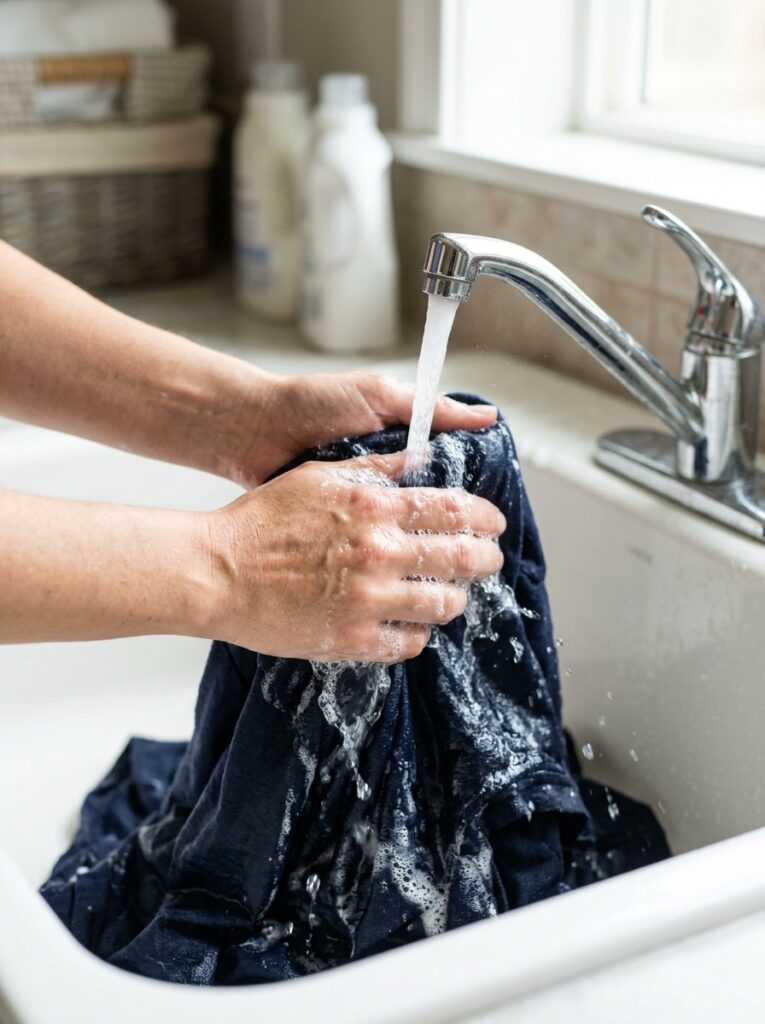
- After soaking, run the garment under warm water and rub the stained area between your fingers
- Rewash in the machine using a small dose of detergent and an extra rinse cycle
- Check before drying. Repeat if residue remains.
White vinegar is acidic and works by dissolving the alkaline detergent residue. It is safe on all fabric colors and will not cause any bleaching or fading.
Method 2: Dish Soap + Warm Water (For Blue Dye Stains, Light Fabrics)
- Blot the stained area with a damp, neutral-colored cloth to avoid introducing any dye from the cloth to the garment
- Apply 2 to 3 drops of clear or white dish soap (Dawn clear, for example) directly to the stain
- Work the dish soap into the stain using your fingers or a soft toothbrush with gentle circular motions
- Rinse under warm running water
- Check the stain. Repeat if needed, then rewash in the machine.
Method 3: Lemon Juice + Salt (For White Residue, Light Fabrics)
This method is particularly effective for white chalky residue on light-colored fabrics. The citric acid in lemon juice dissolves mineral-based detergent residue.
- Lay the garment on a flat surface with a towel underneath it
- Squeeze fresh lemon juice directly onto the residue-stained area
- Sprinkle a small amount of table salt over the lemon juice
- Work the mixture gently into the fabric with your fingers
- Rinse with warm water and rewash
⚠️ Warning: Do not use lemon juice on dark or brightly colored fabrics, the citric acid has mild bleaching properties that can cause fading.
Method 4: Rubbing Alcohol (For Stubborn Dye Stains)
If the blue or colored detergent dye is proving resistant to vinegar and soap, rubbing alcohol (isopropyl alcohol) can break it down. Always test on a hidden seam first.
- Dampen a clean white cloth with rubbing alcohol
- Blot the stain firmly, working from the outside edge inward to avoid spreading
- Rinse with cold water immediately after the stain lifts
- Rewash in the machine on a normal cycle
Method 5: Extra Rinse Cycle + No Detergent
For stiffness, waxy residue, or a general buildup of detergent across a whole load, the simplest fix is rewashing with no detergent and an extra rinse cycle. Add 1 cup of white vinegar to the fabric softener dispenser and run a warm cycle. The vinegar acts as a natural rinse aid, cutting through detergent buildup across the entire load.
How to Remove Detergent Stains from Dark Clothes
Dark fabrics show white and chalky residue most visibly, but they are also the most vulnerable to damage from bleaching agents. Stick to these methods for dark clothes:
- White vinegar soak (Method 1 above), completely safe on dark fabrics
- Extra rinse with vinegar in the softener dispenser
- If the white residue is on the surface only: rub with a clean, damp cloth in circular motions, the friction often removes the chalky film without rewashing
- For color-enhancing dark clothes: use a color-safe detergent like Woolite Dark or Perwoll Black in future washes
Never use bleach, lemon juice, or high concentrations of hydrogen peroxide on dark clothing.
Preventing Detergent Stains in the Future
Once you have dealt with the stain, these steps will prevent a repeat:
Use less detergent than you think you need
This is the number one fix. Most modern detergents are 2x or 3x concentrated, meaning half a cap is often sufficient for a normal load. If your water is soft, reduce dose further. Tide, Persil, and similar premium detergents are particularly concentrated.
Switch to pods or single-dose packets
Pods like Tide PODS or Arm & Hammer PowerPaks dispense a pre-measured amount of detergent and are designed to dissolve fully in water before contacting clothes. They essentially eliminate dosing errors and are great for cold water washes.
Add detergent to the machine before clothes in top-loaders
In a top-loading machine, add water first, then detergent, then clothes. This ensures the detergent is fully diluted before it contacts the fabric.
Use liquid detergent in cold water
Liquid detergents dissolve far more reliably in cold water than powder. If you prefer cold washes to save energy, switch from powder to liquid.
Add a water softener for hard water
Products like Calgon Water Softener added to each wash neutralize the hard water minerals that cause detergent to leave deposits. It works well and is affordable.
Don’t overload the machine
Leave enough room for water and detergent to circulate freely. As a rule of thumb, you should be able to fit your hand into the top of the drum above the laundry when it is loaded.
For other stain types, see the stain removal guide from the American Cleaning Institute.
Related Guides
- Washing Machine Leaving Grey Residue on Clothes? (Causes and Solutions)
- How to Use Laundry Pods Correctly (Most People Are Doing It Wrong)
- HE Detergent vs Regular Detergent: What’s the Difference?
Frequently Asked Questions
My whole load came out with blue stains. Can I save all of it?
Yes. Rewash the entire load in warm water with no detergent, adding 2 cups of white vinegar to the drum. Run an extra rinse cycle. For particularly stubborn blue staining on individual items, treat those with the dish soap method before rewashing.
Why do I get detergent stains when I use pods?
Pods are generally very reliable, but a few issues can cause staining. Placing the pod at the bottom of the drum before clothes (rather than on top of clothes or in a drawer) is correct, but if the machine uses very little water (common in HE front-loaders), the pod may not fully dissolve. Try running a slightly warmer cycle, or ensure the pod makes contact with water immediately by placing it in the drum before any clothes.
Can hard water cause permanent staining?
Hard water mineral deposits on clothes are generally not permanent and can be dissolved with white vinegar or a citric acid soak. However, if clothing is repeatedly washed in very hard water without treatment, the buildup can dull colors and make fibers feel rough over time. Consistent use of a water softener additive prevents this.
Why does my detergent stain my dark clothes but not light ones?
White or chalky detergent residue is visible on dark fabrics due to contrast. It is also present on light fabrics, but you simply cannot see it. Dark fabrics may also show the residue more prominently if you are using a detergent with optical brighteners. These are chemical compounds designed to make whites appear brighter, and they can cause a faint white cast on dark fabrics.
How do I know if I live in a hard water area?
If your sinks and faucets develop white chalky limescale buildup, your water is hard. You can also get a simple water hardness test strip (available at hardware stores and on Amazon for a few dollars) to measure the exact hardness level. Most areas in the American Midwest, Southwest, and Southeast have moderately to very hard water.
