
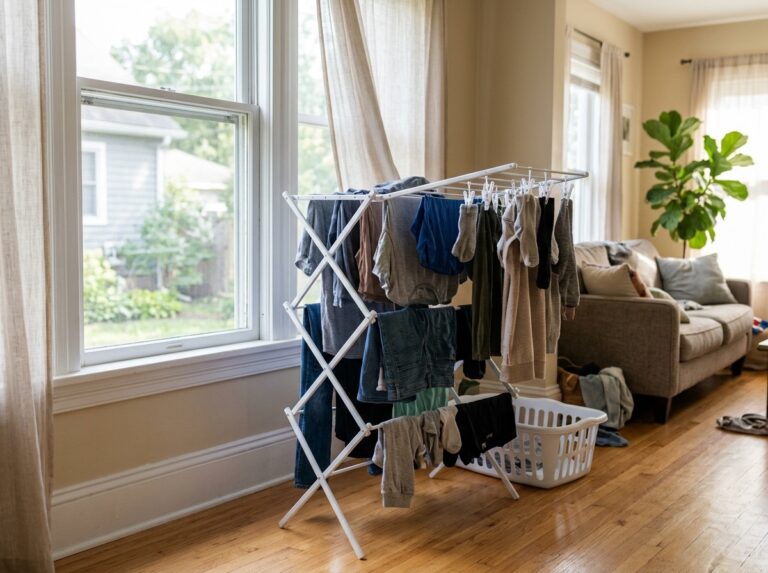
You throw a load of washing on, let it dry indoors overnight, and wake up to that familiar damp, musty smell on clothes that were technically clean. It’s one of laundry’s most frustrating problems.
The good news: it’s completely fixable. The culprit is almost never the washing itself. It’s the drying environment. When clothes stay wet too long in a low-airflow space, a type of bacteria called Moraxella osloensis begins to break down the fatty acids in fabric, producing that unmistakable stale odor.
Stop the bacteria, stop the smell. Here’s how to do exactly that.
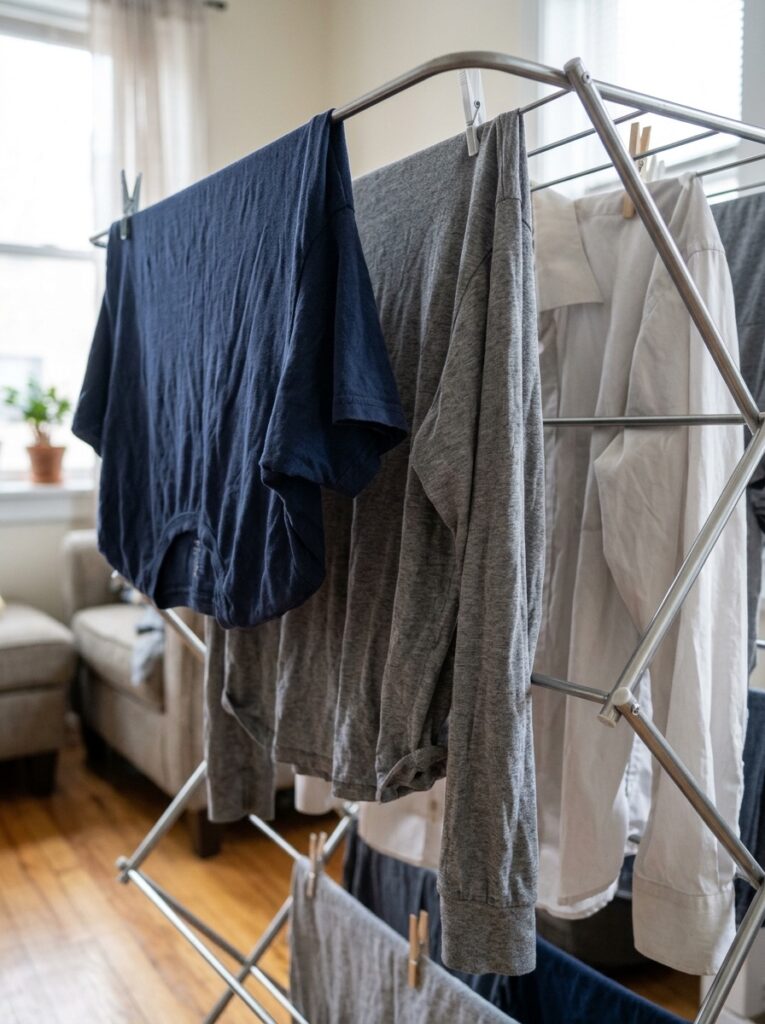
Table of Contents
Why Do Clothes Smell Damp When Dried Indoors?
Understanding the cause makes the fix obvious. There are four main reasons indoor-dried clothes develop a musty odor:
- Too much water left in the clothes after the wash cycle
- Poor airflow around hanging garments
- High humidity in the drying room, the air becomes saturated and evaporation slows dramatically
- Clothes hung too close together, trapping moisture between them
- Clothes taken off the airer before they are completely dry
- A dirty washing machine that transfers mold or mildew to laundry
💡 The Science: Moraxella osloensis bacteria is naturally present on human skin and thrives in the damp fabric environment. It feeds on skin cells and oils trapped in fibers, releasing sulfurous, musty-smelling compounds as it multiplies. Speed up drying = kill the smell before it starts.
12 Ways to Stop Clothes Smelling Damp When Drying Indoors
1. Maximize the Spin Cycle Before Drying
The single most impactful step you can take is removing as much water as possible before the clothes even leave the machine.
Always select the highest spin speed the care label allows. For everyday cotton items, 1,200 RPM or higher is ideal. If clothes still feel heavy and wet after the cycle, run an additional spin-only cycle. Most modern washers let you do this without re-washing.
For delicate items that cannot handle a high spin, use the towel roll method: lay the garment flat on a clean, dry towel, roll it up tightly, and press down firmly for 30 seconds. The towel will absorb a significant amount of moisture.
💡 Tip: Jeans, towels, and sweatshirts hold a surprising amount of water. Always double-spin these heavy items before indoor drying.
2. Hang Clothes Immediately After the Wash Cycle
The clock starts the moment the wash cycle ends. The longer wet clothes sit in the drum, the more opportunity bacteria has to multiply and create odor.
Aim to hang clothes within 30 minutes of the cycle finishing. Leaving laundry sitting in a closed washer for hours is one of the most common causes of that musty smell that no amount of re-drying will fix. You have to rewash at that point.
⚠️ Warning: If your machine smells bad when you open the door, that odor will transfer straight to your clean laundry. Run a hot drum clean cycle monthly using a machine cleaner tablet or 2 cups of white vinegar on an empty 140°F cycle.
3. Space Garments Out Strategically
Cramming clothes onto a drying rack is the indoor drying equivalent of packing wet clothes into a bag. Air cannot penetrate dense clusters of fabric.
Leave at least 1 to 2 inches of space between each garment. Hang smaller, thinner items on the lower rungs of the airer where air tends to move faster, and larger items like towels or jeans at the top where heat rises. Make sure nothing is folded over on itself.
If you have more laundry than rack space, do two smaller loads rather than crowding one large one.
4. Use a Dehumidifier
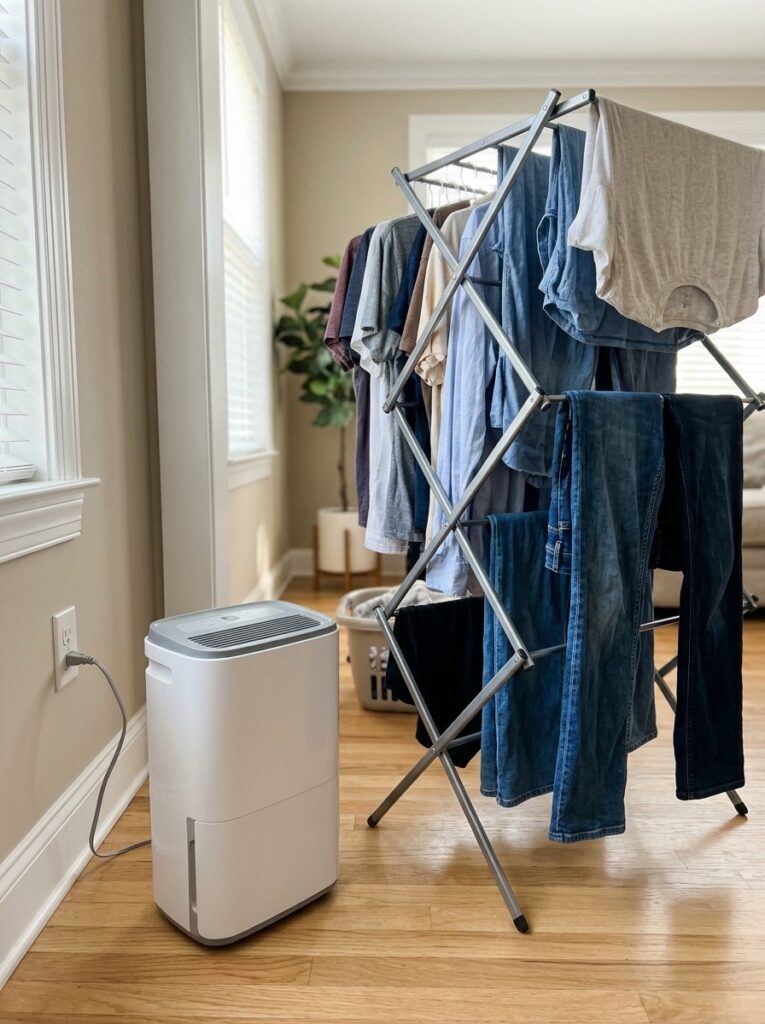
This is the most effective single purchase you can make for indoor drying. A dehumidifier actively removes moisture from the air, which directly accelerates evaporation from your clothes.
Target room humidity of 40 to 50% RH. At higher humidity levels (above 65%), drying times increase dramatically, and the risk of mildew smell rises sharply.
To maximize effectiveness, dry clothes in a small room like a spare bedroom or laundry room, close the door, and run the dehumidifier on a laundry or high setting. Models like the Midea 20-Pint Dehumidifier or the hOmeLabs 30-Pint are both popular and effective for this purpose.
Most dehumidifiers have a 30 to 70 pint daily capacity. For a typical load of laundry, they will need to remove roughly 4 to 6 pints of water, so a mid-size unit running for 3 to 4 hours is usually sufficient.
5. Use a Fan to Boost Airflow
Airflow is just as important as low humidity. Even in a dry room, still air will slow evaporation considerably. A fan solves this instantly.
Position a box fan or oscillating fan so it blows directly across (not into) the drying rack. Oscillating fans are more effective because they circulate air throughout the room, preventing any one spot from becoming a humid dead zone.
On a warm day with windows open, a fan combined with fresh air can dry a full load in 4 to 6 hours, comparable to a low-heat dryer setting.
6. Dry Near a Heat Source, But Not On It
Warm air holds more moisture than cold air, which means warmer rooms dry clothes faster. Positioning your drying rack near (but not directly on) a heat source speeds things up significantly.
Acceptable options: drying rack placed 1 to 2 feet from a radiator, drying rack near a baseboard heater, or drying in a room with active central heating.
What to avoid: draping clothes directly over a radiator. This blocks heat circulation, creates an uneven hot spot on the fabric, and actually raises the humidity in the immediate area around the clothes, the opposite of what you want.
⚠️ Warning: Drying clothes directly on electric space heaters is a fire hazard. Keep at least 12 inches of clearance from any open heat source.
7. Open a Window When the Weather Allows
Fresh outside air is typically drier than indoor air, especially in the morning. Opening a window for even 30 to 60 minutes during drying creates passive ventilation that helps move humid air out of the room.
This is most effective in spring, fall, and dry winter days. On rainy or very humid summer days, outside air may actually be more humid than inside, in that case, skip the window and rely on a dehumidifier instead.
8. Dry in the Bathroom With the Exhaust Fan Running
Bathrooms with exhaust fans are an underrated indoor drying location. The fan is designed to pull moist air out of the room, which is exactly what you need when drying laundry.
Set up a portable drying rack in the bathtub or on the floor, and run the exhaust fan continuously. This is particularly effective for a small number of items like underwear, socks, and t-shirts that can dry quickly.
9. Consider a Heated Drying Rack
Heated drying racks (also called electric clothes airers) are a low-cost alternative to a dryer. They use heating elements built into the bars of the rack to warm clothes directly, combining gentle heat with the open-air drying environment.
Popular models like the Homefront Electric Clothes Airer and the ElectriQ Heated Clothes Airer run at very low wattage (around 200 to 300W) compared to a dryer (2,000 to 3,000W), making them energy-efficient. Clothes dried on a heated rack rarely develop musty smells because they dry quickly and evenly.
10. Don’t Over-Dry in a Stuffy Room
A common mistake is drying clothes in a room with no ventilation, for example, a closet, a small bathroom with no window, or a bedroom with the door and windows closed. Even if the room is warm, without air movement the humidity around the clothes will saturate the local air and stalling evaporation.
Always ensure there is some form of air movement or ventilation wherever you are drying.
11. Don’t Put Clothes Away Until Completely Dry
Slightly damp clothes packed into a wardrobe or folded into drawers will develop a mildew smell within 24 to 48 hours. Always perform a quick check before storing: press your hand against the thickest part of each garment (usually the seams, waistband, or collar). If it feels cold or damp, it needs more drying time.
A simple trick: turn a shirt or jeans inside-out about halfway through drying. The inside fabric typically takes longer to dry than the outside surface.
12. Refresh Already-Musty Clothes
If your clothes have already developed a damp smell, a normal rewash may not fully remove it. The bacteria and their waste compounds are embedded in the fibers.
To properly deodorize:
- Add 1 cup of white distilled vinegar to the fabric softener dispenser
- Use your regular detergent as normal
- Wash on the hottest cycle safe for the fabric
- Dry immediately afterward with maximum airflow
For particularly stubborn odors, soak the items in a solution of 1 gallon of water and 1 cup of white vinegar for 30 minutes before washing. Alternatively, 1/2 cup of baking soda added directly to the drum (not the dispenser) works excellently on mildew smells by neutralizing the acidic bacterial byproducts.
💡 Product Tip: Tide with Febreze Sport, OxiClean Odor Blasters, and Arm & Hammer Plus OxiClean are all laundry detergents specifically formulated to destroy odor-causing bacteria rather than just masking them with fragrance. Worth keeping on hand if indoor drying is your norm.
The EPA explains how indoor moisture leads to mold in its brief guide to mold, moisture and your home.
Related Guides
- Why Does My Laundry Still Smell After Washing? (And How to Fix It)
- How to Get Mildew Smell Out of Towels (For Good)
- What Happens If You Dry Soapy Clothes? (Find Out)
Frequently Asked Questions
Why do my clothes smell damp even after they appear dry?
If the surface feels dry but the smell persists, it usually means the interior fibers, especially in thicker garments, are still slightly damp. The odor-causing bacteria have had enough time to produce compounds that have absorbed into the fabric. Rewash using the vinegar method described above and ensure the garment is completely bone-dry before storing.
Is it bad for your health to dry clothes indoors?
Drying clothes indoors regularly raises indoor humidity levels, which can promote mold and dust mite growth in the home over time. This is a concern primarily in small, poorly ventilated spaces. Using a dehumidifier during indoor drying essentially eliminates this risk, as it prevents humidity from rising above healthy levels.
Can I use fabric softener to prevent damp smells?
Fabric softener does not prevent damp smells and can actually make them worse over time. Softener coats fibers with a waxy layer that traps moisture and residues, providing more food for odor-causing bacteria. White vinegar in the rinse cycle is a better alternative for odor control, as it kills bacteria and removes residue buildup.
How long is too long to leave wet clothes in the washing machine?
The general guideline is no longer than 2 hours. After that, bacterial growth can begin, especially in warm weather or in a warm utility room. In summer, aim to transfer clothes within 30 to 60 minutes. If you forget and they’ve been sitting overnight, rewash before drying.
Will a laundry scent booster help with damp smell?
Scent boosters (like Downy Unstopables or Gain Fireworks) can mask a mild damp smell temporarily, but they don’t eliminate the bacteria causing it. For a persistent musty odor, you need to deodorize with vinegar or baking soda and address the drying environment. Use scent boosters as a finishing touch after the underlying problem is solved.
Do moisture-wicking fabrics smell worse than cotton when dried indoors?
Yes, synthetic moisture-wicking fabrics like polyester and nylon tend to develop stronger odors when dried slowly indoors because they are hydrophobic. They don’t absorb water like cotton, so moisture sits on the surface longer and bacteria have more surface exposure. Always prioritize fast drying for synthetic athletic wear.
