
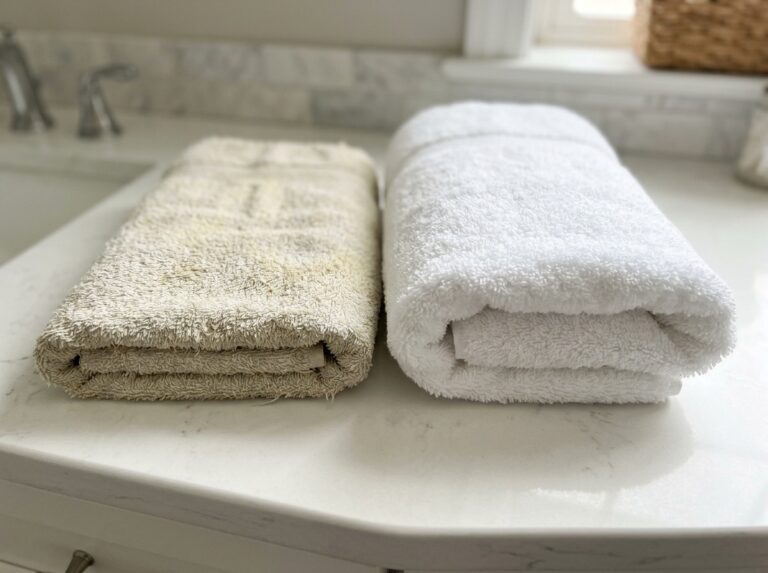
You pull a towel from the shelf that used to be bright white or a crisp color, and now it has a distinct yellow tinge. It is not dirty exactly, but it does not look clean either.
Towel yellowing is extremely common, and it is usually not a sign that your towels are ruined or that you need to replace them. In most cases, yellowing has a specific, fixable cause, and once you understand what is causing it, fixing it is straightforward.
This guide covers every cause of yellowing towels and gives you clear methods to restore them and prevent it from happening again.
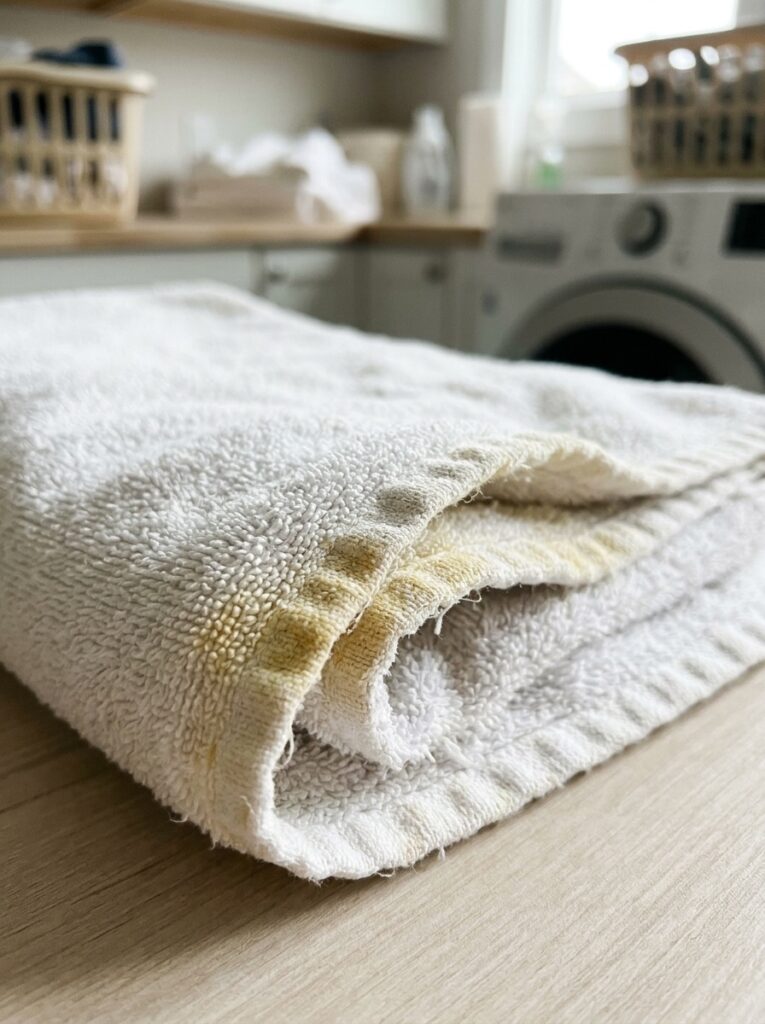
Table of Contents
The Main Causes of Yellow Towels
1. Body Oils and Sebum
The most common cause of yellowing in both bath towels and hand towels is sebum, the natural oil your skin produces. Every time you dry off after a shower, some of this oil transfers to the towel. With repeated use between washes, these oils accumulate in the cotton fibers. When sebum oxidizes (reacts with oxygen in the air), it turns yellow.
This explains why yellowing typically appears in concentrated patches, around the center of bath towels where you dry your face and torso, and near the top and bottom edges of face towels.
2. Sweat
Sweat contains urea, lactic acid, and proteins that, when left on fabric and exposed to heat from washing or drying, create yellow staining. This is the same mechanism behind yellowing armpits in shirts. If you use towels as gym towels or for wiping sweat during activity, yellowing will happen faster and more intensely than with regular bath use.
3. Skincare and Hair Products
Many common personal care products contain ingredients that cause towel yellowing:
- Benzoyl peroxide (in acne treatments like PanOxyl, Differin, Proactiv). This is a particularly aggressive bleaching agent that removes color from towels and causes white towels to turn yellow-orange. Even residue on your face after washing can transfer to towels.
- Self-tanner: contains DHA (dihydroxyacetone), which reacts with fabric fibers and causes unmistakable orange-yellow staining
- Bleach-containing hair products: hair bleach, lightening shampoos, and some styling products contain peroxide that transfers from hair to towels
- Oil-based moisturizers and sunscreens: similar to sebum, these oxidize in the fiber over time
Warning: If you use benzoyl peroxide for acne, designate dark towels for your face. This ingredient will discolor even dark-colored towels. It is that reactive. Many people do not realize their acne medication is destroying their towels.
4. Detergent and Fabric Softener Residue
Using too much detergent, or detergent that does not fully rinse out at lower temperatures, leaves a residue in the fibers. This residue attracts and traps oils and dirt, and when heated in the dryer repeatedly, it creates a yellow-brown buildup.
Fabric softener is an even more common culprit. It deposits a waxy coating that oxidizes over time and turns yellow, particularly on white towels. If you use fabric softener regularly and your white towels are yellowing, this is likely your primary cause.
5. Hard Water Mineral Deposits
Calcium, magnesium, iron, and manganese in hard water bind to fabric fibers during washing. Over multiple wash cycles, these mineral deposits accumulate and create a dull, yellowish discoloration, particularly noticeable on white towels. Iron and manganese deposits specifically can create a more intense rust-orange yellowing, often around hem edges and seams.
6. Improper Washing
Washing white towels together with colored items, particularly newer, darker items, can result in dye transfer that creates a permanent yellow or grayish tint. Similarly, washing towels at temperatures too cool to fully remove body oils leaves those oils in the fibers to oxidize slowly.
7. Over-Bleaching
Counterintuitively, using too much chlorine bleach causes yellowing rather than preventing it. Bleach breaks down cotton fibers and, when used excessively, causes the remaining fiber protein to oxidize and turn yellow. This type of yellowing is essentially permanent.
Method 1: White Vinegar Soak
Best for: general yellowing from oils, sebum, or mineral deposits
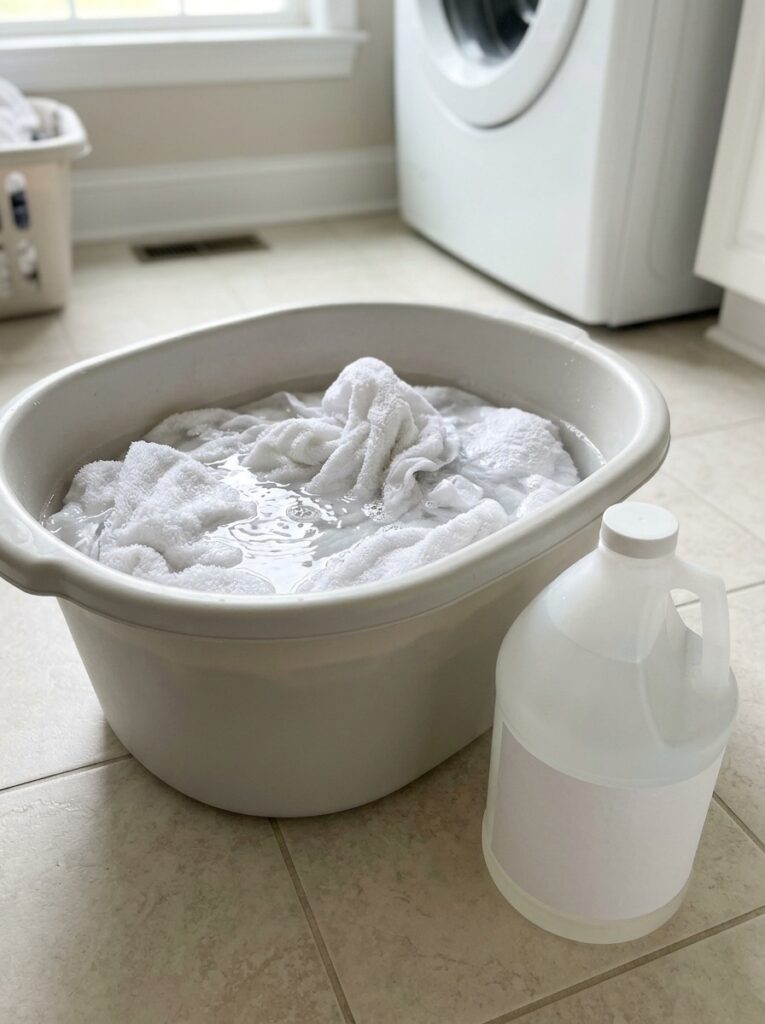
- Fill a tub or basin with hot water, as hot as the care label allows, ideally 140 degrees F (60 degrees C).
- Add 1 to 2 cups of white vinegar per gallon of water.
- Submerge the towels and soak for at least 1 hour, or overnight for severe yellowing.
- Wring out and launder as normal, adding half a cup of vinegar to the rinse cycle.
The acetic acid in vinegar dissolves mineral deposits, breaks down oxidized oils, and removes detergent buildup, addressing the three most common causes of yellowing simultaneously.
Method 2: Baking Soda Treatment
Best for: deodorizing and brightening yellowed towels
- Add half a cup of baking soda directly to the washing machine drum along with your regular detergent.
- Wash at the hottest temperature the care label allows.
- For severe yellowing, add half a cup of vinegar to the rinse cycle as well.
Baking soda lifts stains and deodorizes while boosting the cleaning power of your detergent. For a more intensive treatment, make a paste of baking soda and warm water, apply directly to the yellowed areas, and let sit for 30 minutes before washing.
Method 3: Hydrogen Peroxide
Best for: white towels with yellowing from oxidized oils or sweat
- Add 1 cup of 3% hydrogen peroxide (standard drugstore concentration) directly to the washing machine drum.
- Wash at a hot temperature with a small amount of your regular detergent.
- Run a full cycle and check the results.
Hydrogen peroxide is an oxygen-based bleach, gentler on fibers than chlorine bleach but effective at oxidizing and breaking down the organic compounds that cause yellowing. It is safe for white cotton towels and will not cause the fiber damage that chlorine bleach does.
Tip: OxiClean (sodium percarbonate, a powdered form of hydrogen peroxide) works the same way. Add 1 to 2 scoops to a hot soak or directly to the wash cycle for a powerful yellowing treatment.
Method 4: Lemon Juice Soak
Best for: natural brightening of white towels, particularly for mild yellowing
- Fill a large pot or tub with boiling water.
- Squeeze 6 to 8 lemons into the water, or add 1 cup of bottled lemon juice.
- Submerge the towels and soak for 1 to 2 hours.
- Remove and launder as normal.
Lemon juice citric acid acts as a mild bleaching agent and mineral dissolver. This is a gentler option than vinegar or hydrogen peroxide and is particularly pleasant-smelling.
Method 5: Bluing Agent
Best for: white towels that have turned a dull yellow-gray
Laundry bluing agents like Mrs. Stewart’s Liquid Bluing (available at Walmart and most grocery stores) add a tiny amount of blue pigment to fabric, which optically counteracts yellow tones and makes whites appear brighter. This is the same principle used in many premium laundry detergents.
Follow the package instructions carefully: a tiny amount goes a very long way, and too much creates blue discoloration.
How to Prevent Towels from Turning Yellow
Once you have restored your towels, these habits keep them yellow-free:
- Wash towels every 3 to 4 uses. Do not let oil and sebum accumulate over too many uses
- Use the correct detergent amount (half the standard dose is usually enough for towels)
- Stop using fabric softener on towels. It is a primary cause of yellowing over time
- Wash at 104 degrees F to 140 degrees F, warm enough to break down oils, not just redistribute them
- Wash white towels separately from all colored items
- Use a water softener or add Calgon to each wash if you have hard water
- If you use benzoyl peroxide acne products, use a dark-colored face towel designated for this purpose
- Add half a cup of white vinegar to the rinse cycle regularly as a preventive measure
- Run a monthly maintenance wash with OxiClean or baking soda to prevent buildup before it starts
When Should You Replace Yellowed Towels?
If multiple restoration methods have not worked and the yellowing persists, check whether the discoloration is:
- Uniform yellowing across the whole towel: likely from over-bleaching or significant fiber degradation
- Bright orange or rust-colored patches: likely from benzoyl peroxide or iron in water; hard to reverse once set deep in fibers
- Grayish-yellow discoloration that does not respond to any treatment: may indicate fabric that has simply worn out
In these cases, replacement is the practical answer. For general household use, bath towels have a functional life of 2 to 4 years with good care before they start to look noticeably worn.
For more laundry care basics, see the American Cleaning Institute guide to clean clothes.
Related Guides
- How to Get Mildew Smell Out of Towels (For Good)
- What Is Laundry Stripping and Does It Actually Work?
- How to Keep Towels Soft Without a Dryer (7 Methods That Work)
Frequently Asked Questions
Why are my white towels turning yellow even though I wash them regularly?
Regular washing with the wrong products is often the cause. Fabric softener is the most common culprit. It creates a coating that oxidizes and yellows over time. Check whether you are using fabric softener and stop if so. Switch to white vinegar in the rinse cycle and run a strip wash (vinegar wash with no detergent) to clear existing buildup.
Can I use bleach to fix yellow towels?
For white cotton towels: yes, in moderation. Add half a cup of chlorine bleach to a hot wash cycle. Do not exceed this: over-bleaching causes the fiber proteins to oxidize and turn permanently yellow. Never use chlorine bleach on colored towels. OxiClean or hydrogen peroxide are safer alternatives for both white and colored towels.
What causes yellow stains specifically on pillowcases and face towels?
Sebum (skin oil) combined with saliva (from sleeping with your face on the pillow) creates the yellow discoloration on pillowcases. For face towels, it is the same sebum combined with residual skincare products. Pre-treating these areas with a paste of OxiClean and water before washing removes most staining.
My colored towels are turning orange or bleached in spots, why?
This is almost certainly benzoyl peroxide from acne medication or bleaching agents in hair products or toothpaste. These products act on the dye in colored fabrics, removing color and leaving pale orange or white spots. This damage is permanent and cannot be reversed. Switch to dark towels for your face and keep benzoyl peroxide products from contacting light-colored fabric.
Does sunlight help or hurt yellowed towels?
For white cotton towels, moderate direct sunlight acts as a natural bleaching agent via UV radiation. Hanging white towels in the sun after washing can help brighten them. However, prolonged UV exposure on colored towels causes fading rather than brightening. Use sunlight as a boost, not a regular treatment.
Why do my towels smell musty and look yellow at the same time?
This combination usually indicates that towels have been left damp too long at some point, allowing mildew or bacteria to grow. A combined treatment works best: soak in hot water with 2 cups of white vinegar overnight, then wash with half a cup of baking soda and detergent at the hottest safe temperature. This kills bacteria, removes odors, and dissolves the mineral and oil buildup causing yellowing.
