
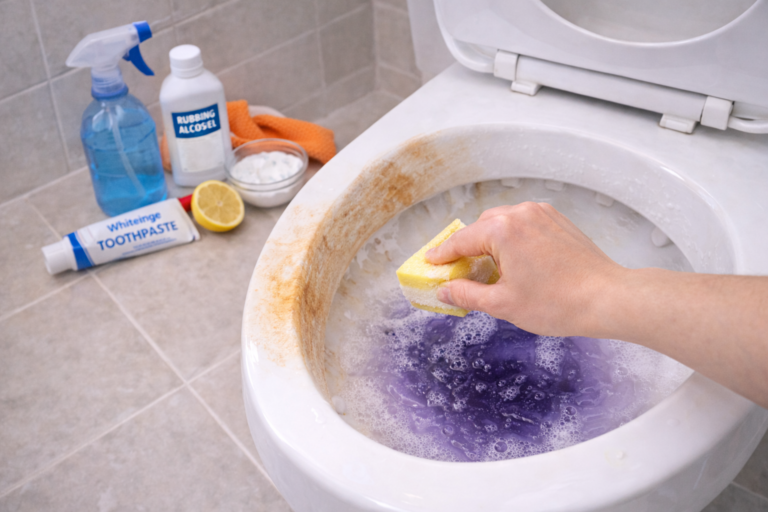
You applied self-tanner the night before.
You forgot to wait long enough before sitting on the toilet. Now there is an orange-brown stain on the seat that is very visible against white plastic, and it does not come off with your regular bathroom spray.
It happens to most self-tanners eventually. The good news is it is completely removable. The trick is picking the right method for the age of the stain and the material of your seat.
Why Fake Tan Stains Toilet Seats
Most self-tanners contain a compound called dihydroxyacetone, commonly known as DHA. DHA works by reacting with the amino acids in the outermost layer of your skin, causing a browning reaction that creates the tan color. The problem is it reacts with other proteins too, and toilet seats have a slightly porous surface that traps the DHA before it fully dries.
Once the DHA has bonded with the seat material, it behaves more like a dye than a surface stain. This is why simply wiping it does not work. You need a product that can either break down the DHA chemically or physically lift the stained surface layer.
Check Your Toilet Seat Material First
Different seat materials respond to cleaners differently:
- White plastic (polypropylene): The most common material. Handles most cleaners including rubbing alcohol and mild bleach. Most methods below work here.
- Wooden toilet seats: More porous, more delicate. Avoid anything too harsh or too wet. Stick to the gentler methods and dry immediately after.
- Padded or cushioned seats: Very porous. Hardest to clean. Act quickly and use gentle methods only. Soaking is not possible.
When in doubt, spot test any cleaning method on a hidden area of the seat before treating the visible stain.
Method 1: Baby Oil or Micellar Water (Fresh Stains Only)
If the tan transferred in the last hour or two, there is a good chance it has not fully bonded yet. Baby oil or micellar water can lift it while it is still loose.
- Apply a generous amount of baby oil or micellar water to a soft cloth.
- Wipe the stained area firmly in circular motions.
- The orange residue should transfer to the cloth.
- Clean the seat with a bathroom cleaner afterward to remove the oily residue.
Act Fast: This only works on very recent stains. If the tan has been sitting for more than a few hours, skip ahead to a stronger method.
Method 2: Baking Soda Paste (Gentle, Safe for Most Seats)
Baking soda is mildly abrasive and is effective on light to moderate fake tan stains. It is gentle enough for wooden and plastic seats alike.
- Make a paste with baking soda and a small amount of water.
- Apply the paste directly to the stain.
- Let it sit for 5 to 10 minutes.
- Scrub gently with a soft sponge or cloth.
- Rinse clean with a damp cloth.
For extra cleaning power, apply the baking soda paste and then spray a small amount of white vinegar over the top. The fizzing reaction helps loosen the stain from the surface.
Method 3: Magic Eraser (Best for Plastic Seats)
A Magic Eraser (melamine foam) is one of the most consistently effective tools for fake tan stains on plastic toilet seats. It works by physically scrubbing away the top layer of stain through micro-abrasion. Cleaning professionals frequently recommend it for this exact problem.
- Wet the Magic Eraser and squeeze out excess water so it is damp but not soaking.
- Rub over the stained area in gentle circular motions.
- Watch the eraser turn orange or brown as it lifts the tan.
- Wipe the area clean with a damp cloth.
Caution: Magic Erasers are mildly abrasive. Do not scrub aggressively, and avoid using on high-gloss or coated surfaces. They can dull finish with excessive use. Do not use on wooden seats.
Method 4: Rubbing Alcohol (For Dried, Stubborn Stains)
Isopropyl alcohol is a solvent that breaks down DHA-based staining. It is particularly effective on stains that have dried and set.
- Dampen a clean cloth with rubbing alcohol (70 percent or higher concentration).
- Apply to the stained area and rub firmly.
- The stain should break down and transfer to the cloth.
- Rinse the seat with clean water afterward.
Never Mix: Do not use rubbing alcohol right after bleach or any other cleaner without rinsing the seat first. Never mix rubbing alcohol and bleach directly.
Method 5: Nail Polish Remover (Acetone) – For Really Stubborn Stains
Acetone is a strong solvent and works well on persistent fake tan stains on plastic seats. Use it carefully.
- Apply a small amount of nail polish remover (acetone-based) to a cotton ball or cloth.
- Dab and wipe the stain, working in small sections.
- Rinse the seat thoroughly with water immediately afterward.
Plastic Only: Do not use acetone on wooden toilet seats. It can strip varnish and damage the finish. Keep it away from any chrome or metal hardware on the seat.
Method 6: Diluted Bleach (Last Resort for White Plastic Seats)
Diluted bleach can remove deeply set fake tan stains from white plastic toilet seats, but use it as a last resort given the risks to seat material and surrounding hardware.
- Mix 1 tablespoon of household bleach with 1 cup of water in a spray bottle.
- Spray onto the stained area and let sit for no more than 5 minutes.
- Wipe clean and rinse thoroughly.
Avoid Overuse: Bleach will yellow and degrade plastic seats with repeated use. Use this method occasionally rather than routinely.
How to Prevent Fake Tan Staining Your Toilet Seat
- Wait at least 6 to 8 hours after applying self-tanner before sitting on any surface, or follow the specific wait time on your product label
- Place a disposable paper toilet seat cover or a sheet of toilet tissue on the seat before sitting if you must use the bathroom before the tan has fully developed
- Keep dedicated toilet seat covers for tanning days (reusable, washable silicone covers are available specifically for this)
- Apply self-tanner with a mitt and allow it to fully dry before dressing and moving around
Frequently Asked Questions
The fake tan stain has been on the toilet seat for weeks. Can it still be removed?
Yes, but older stains are harder to shift and may require the stronger methods. Try rubbing alcohol first. If that does not work, a Magic Eraser followed by nail polish remover is usually enough for even old stains on plastic seats. Completely set stains on wooden seats may leave a faint shadow even after cleaning.
Will regular bathroom spray remove fake tan from a toilet seat?
Standard bathroom cleaner is usually not strong enough to break down DHA-based tanning compounds. You need either a solvent (rubbing alcohol, acetone), an abrasive (Magic Eraser, baking soda), or a combination approach.
Does The Pink Stuff work on fake tan toilet stains?
Yes. The Pink Stuff paste is a mildly abrasive cleaner that works well on plastic toilet seats. Apply with a damp sponge, scrub gently, and rinse. It is particularly effective on light to moderate stains.
My toilet seat is wooden and has a fake tan stain. What should I use?
For wooden seats, stick to the gentler methods: baking soda paste, baby oil, or micellar water. Avoid acetone, bleach, and aggressive scrubbing which can damage the varnish. Dry the seat thoroughly after cleaning.
Can I use hydrogen peroxide on a fake tan toilet seat stain?
Yes, 3 percent hydrogen peroxide applied with a cloth and left for 10 minutes can help lift fake tan stains, particularly on white plastic seats. It has a mild bleaching effect without the harshness of chlorine bleach.
Related Articles: