
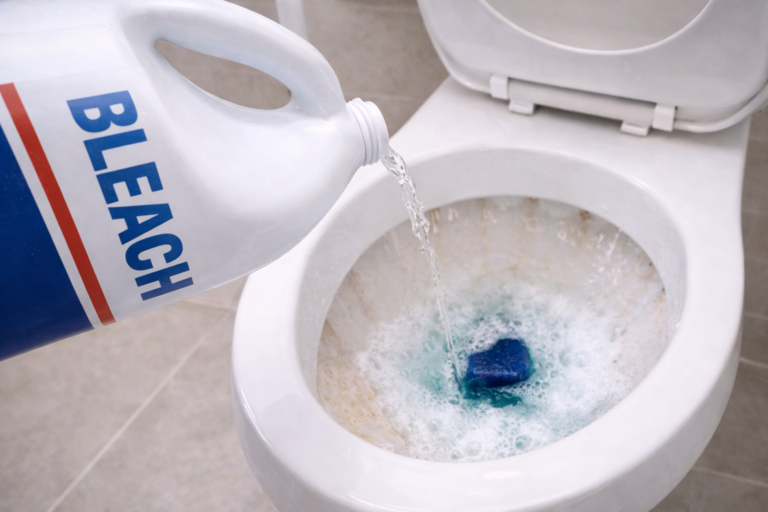
Bleach has been the standard toilet cleaner in most American households for decades. The white bottle under the sink, a splash in the bowl, a quick scrub, and a flush. It is fast, familiar, and kills germs on contact.
But there is a lot of conflicting advice online about whether bleach is safe for toilets. Some plumbers say never use it. Others say a splash a week for 30 years and no problems.
So what is the actual answer?
The truth, as usual, depends on where and how you use it.
Bleach on the Porcelain Bowl: Generally Safe With Caveats
Standard household bleach (sodium hypochlorite diluted to around 3 to 8 percent) applied to a porcelain or vitreous china toilet bowl and flushed away after 10 to 15 minutes is generally safe. Porcelain is a glass-fused ceramic surface that bleach does not readily attack with brief exposure.
However, there are situations where bleach can cause bowl problems:
- Enamel toilets with iron content: If your toilet has an enamel coating containing iron, bleach can oxidize the iron and actually cause rust-colored staining rather than removing it. The stain bonds with the surface and is very hard to remove.
- Undiluted bleach left too long: Prolonged contact with concentrated bleach can gradually dull the glazed finish of porcelain. Over years of heavy use, this creates a rougher surface that is more prone to staining.
- Bleach on plastic toilet seats: Bleach will yellow and degrade plastic toilet seats over time, especially cheaper models. Spray it on, wipe immediately, and rinse. Do not soak a plastic seat in bleach solution.
- Colored or patterned toilets: If your toilet has a colored finish (rare but they exist), bleach can fade it permanently.
For a standard white porcelain bowl, a diluted bleach cleaning done properly is not going to cause meaningful damage. Half a cup of household bleach in the bowl, left for 10 minutes, then scrubbed and flushed, is a well-established and safe practice according to most plumbing professionals.
Bleach in the Tank: A Very Different Story
This is where bleach causes real, documented damage. The toilet tank contains rubber flappers, gaskets, and seals that are essential to the flushing mechanism. These are not designed for continuous bleach exposure.
When bleach tablets or in-tank products are placed in the cistern, every flush sends concentrated bleach through the tank hardware. The results over time:
- The rubber flapper degrades and loses its seal, causing the toilet to run continuously
- Metal bolts connecting the tank to the bowl rust and corrode
- Plastic fill valves and other components become brittle
- A running toilet wastes up to 200 gallons of water per day, adding significant cost to your water bill
The rule from virtually every plumbing professional is clear: never put bleach tablets, drops, or any continuous-release bleach product inside the toilet tank.
How to Use Bleach on Toilets the Right Way
Bowl Cleaning Method
- Flush to wet the sides of the bowl.
- Apply 1/2 cup of regular household bleach around the inside rim of the bowl.
- Let it sit for 10 minutes maximum. Do not leave it overnight.
- Scrub the bowl thoroughly with a toilet brush, including under the rim.
- Flush to rinse everything away completely.
Good Ventilation: Always open a window or run the bathroom fan when using bleach. The fumes in an enclosed bathroom can irritate your airways and eyes.
Never Mix: Do not use bleach right after or before using ammonia-based cleaners, vinegar, or any other acidic cleaners. Mixing bleach with ammonia creates toxic chloramine gas. Mixing with acid releases chlorine gas. Always rinse the bowl with plain water between different cleaners.
Cleaning the Outside of the Toilet With Bleach
For the exterior surfaces, seat, and lid, use a diluted bleach spray (about 1 tablespoon bleach per quart of water) rather than undiluted bleach. Apply, let sit for 5 minutes, and wipe clean with a cloth. Rinse the plastic seat and lid to prevent yellowing.
What Bleach Is Good For in Toilet Cleaning
- Killing bacteria, viruses, and mold effectively
- Removing light organic staining inside the bowl
- Whitening a yellowed bowl surface caused by bio-film
- Sanitizing after illness in the household
What Bleach Cannot Do Well
- Remove hard water mineral deposits or limescale: Bleach does not dissolve calcium deposits. In fact, bleach can make rust stains caused by iron in hard water worse. Use a citric acid-based cleaner, CLR, or white vinegar for mineral stains.
- Remove rust stains: These require an acid-based cleaner, not an oxidizer like bleach.
- Prevent mold permanently: Bleach kills surface mold but does not penetrate porous grout or caulk to kill it at the root. Mold returns quickly.
Better Alternatives for Specific Toilet Problems
For hard water rings and mineral staining: White vinegar or CLR Calcium Lime and Rust Remover. Pour into the bowl, let sit for 30 to 60 minutes, then scrub and flush.
For routine disinfecting without bleach: Hydrogen peroxide (3 percent, straight from the bottle) works as a disinfectant and is gentler on surfaces and seals. Spray into the bowl, let sit 10 minutes, scrub, and flush.
For odor control between cleans: Baking soda dropped into the bowl and left overnight neutralizes odors without any chemical risk.
For heavy-duty stain removal: Bar Keepers Friend (contains oxalic acid) mixed into a paste handles rust, mineral stains, and buildup that bleach cannot touch.
Frequently Asked Questions
Can I leave bleach in the toilet overnight?
It is not recommended. Leaving concentrated bleach in contact with porcelain for hours can begin to dull the glaze over time. More importantly, if other household members add different cleaners before it is flushed, you risk creating toxic gas. For a deeper clean, 30 minutes is plenty. If you want to treat overnight, use white vinegar or a diluted oxygen bleach solution instead.
Why does my toilet bowl have brown or rust stains even though I clean with bleach?
Bleach is an oxidizer, which means it can actually make iron-based rust stains worse by locking them in rather than lifting them. Switch to an acid-based limescale remover (CLR, Lime-A-Way) or a oxalic acid product like Bar Keepers Friend for rust and mineral stains. These dissolve rather than oxidize the deposits.
Is bleach safe for old toilets?
Older toilets may have worn glaze that makes them more susceptible to staining from bleach over time. Use a diluted solution and do not leave it soaking. Old toilets are also more likely to have aging rubber seals that are already fragile, so keep bleach completely out of the tank.
How often is it safe to use bleach to clean a toilet bowl?
Once a week is reasonable for a standard cleaning schedule. For daily freshening, a squirt of dish soap or a toilet-specific cleaner is gentler and adequate for maintenance. Reserve bleach for when you need disinfecting or stain-fighting power.
My toilet turned blue-green after I used bleach. What happened?
Blue-green staining after bleach is usually caused by bleach reacting with copper in the water supply or with older bronze or brass hardware inside the tank. It can also indicate the presence of copper pipes. Try a diluted white vinegar treatment to neutralize and remove the discoloration.
Related Articles: