
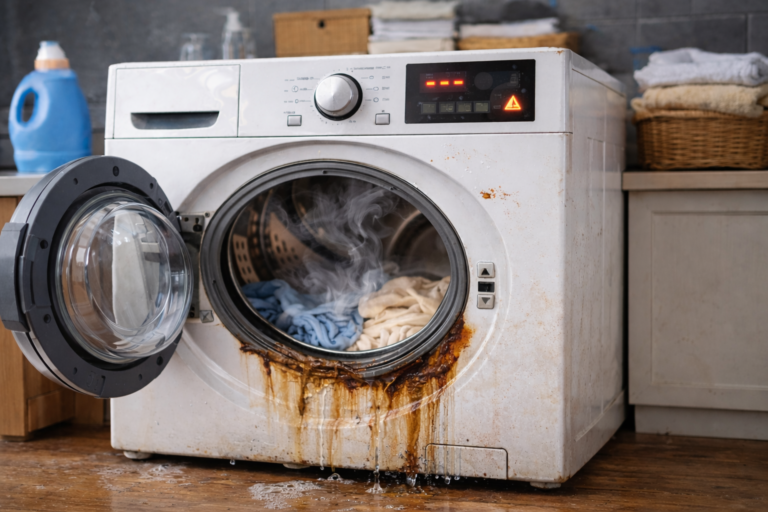
Whether you’re budgeting for a future appliance purchase, deciding whether to repair or replace a broken machine, or just curious how many years you’ve got left with your current washer, the lifespan question matters.
The honest answer: most washing machines last between 10 and 14 years with regular use and basic maintenance. But that range has a lot of variance — the brand, how often you use it, how well you maintain it, and whether you catch small problems before they become big ones all play a significant role.
Average Washing Machine Lifespan by Type
Top-loading washing machines
Traditional top-loaders with a central agitator are generally the most durable and longest-lasting type, commonly reaching 14 years or more. They have fewer complex parts than front-loaders and are cheaper to repair when something does go wrong.
Front-loading washing machines
Front-loaders are more water and energy efficient, but they tend to have shorter lifespans, averaging around 10 to 12 years. The door gasket, bearings, and control electronics are common failure points. They also require more active maintenance (keeping the drum dry, cleaning the gasket) to reach their potential lifespan.
High-efficiency top-loaders (no agitator)
These sit between traditional top-loaders and front-loaders in terms of lifespan, typically 10 to 13 years. They’re gentler on clothes than agitator machines but have more complex mechanisms than traditional top-loaders.
What Affects How Long a Washing Machine Lasts
- Usage frequency: A machine doing one or two loads a week will last significantly longer than one running 10+ loads weekly. High-volume households should budget for more frequent replacement.
- Load size: Consistently overloading the drum stresses the motor, bearings, and drum suspension. Washing within the machine’s rated capacity extends its life substantially.
- Maintenance habits: Cleaning the drum monthly, keeping the door gasket dry, and using the correct detergent type and amount all meaningfully extend machine life.
- Water hardness: Hard water causes limescale buildup in hoses, pumps, and heating elements over time. If you’re in a hard water area, using a water softener tablet in each wash helps significantly.
- Brand and build quality: Budget machines from lesser-known brands often use lower-grade motors and components. Brands like Miele, LG, and Bosch tend to outlast budget alternatives by several years.
7 Warning Signs Your Washing Machine Is Dying
1. It’s making new noises
Banging, grinding, squealing, or loud thumping during the spin cycle are all signs of worn drum bearings, a failing motor, or an unbalanced drum. A single load going off-balance is normal, consistent loud noises are not.
2. It’s leaking
Water on the floor after a wash can mean a worn door seal, a failing pump, a loose hose connection, or cracks in the drum. Some causes are cheap fixes; others signal the beginning of the end.
3. The drum isn’t spinning properly
Clothes coming out soaking wet rather than just damp usually means the spin cycle isn’t working at full speed — often caused by a failing motor, a worn belt (in older machines), or a faulty lid/door switch.
4. It’s not draining
Standing water in the drum after a cycle means a blocked filter, a kinked hose, or a failing drain pump. The filter blockage is usually a cheap DIY fix; a failed pump is a more significant repair.
5. It’s vibrating excessively
Some vibration is normal, especially during spin. Violent shaking that moves the machine across the floor suggests worn suspension springs, failed shock absorbers, or drum bearing issues.
6. It smells and you can’t fix it
A persistent musty or burning smell that doesn’t resolve after cleaning the drum and gasket can indicate mold growth inside the machine body itself, or electrical issues with the motor.
7. Repairs are getting expensive
The standard rule of thumb in the appliance industry is: if a repair costs more than 50% of the machine’s current replacement value, it’s usually better to replace. A repair quote of $400 on a machine that would cost $600 to replace new makes little financial sense.
Repair or Replace? A Simple Framework
Ask yourself three questions:
- How old is the machine? If it’s over 10 years old, even a successful repair buys you limited additional life.
- What does the repair cost relative to a replacement? Apply the 50% rule above.
- Has it needed multiple repairs already? A machine that’s had two or three significant repairs is statistically likely to need more, you’re often better off putting the repair money toward a new machine.
| If You’re Shopping for a Replacement Look for machines with at least a 2-year manufacturer warranty and strong user reviews for reliability over 5+ years. LG, Samsung, and Bosch consistently score well for longevity. Front-loaders from Miele are the gold standard for long life but come at a premium price. [Amazon link: LG Front Load Washing Machine] |
How to Make Your Washing Machine Last Longer
- Clean the drum monthly with a washing machine cleaner tablet or a hot vinegar cycle.
- Leave the door or lid open after every wash to prevent moisture buildup and mold.
- Clean the detergent drawer regularly, residue buildup causes blockages.
- Don’t overload. If it won’t close comfortably, remove some items.
- Use the correct detergent type (HE for HE machines) and the correct amount.
- Clean the lint filter and pump filter every few months.
- Check hoses annually for cracks or bulging and replace every 5 years as a precaution.
Frequently Asked Questions
Is it worth repairing a 7-year-old washing machine?
Generally yes, if the repair cost is under 50% of replacement value and the machine has no history of repeated breakdowns. A 7-year-old machine that’s been well maintained could realistically have another 5 to 7 years of life. A $150 to $200 repair on a machine that would cost $500 to replace is usually worthwhile.
Do more expensive washing machines last longer?
Generally yes — premium brands use higher-grade motors, bearings, and drum construction. Miele is the standout example, with machines often lasting 20 years. LG and Bosch sit in the mid-premium range and typically outlast budget brands by 3 to 5 years. The higher upfront cost often works out cheaper over the full lifespan.
Does washing machine brand affect lifespan?
Yes, meaningfully. Miele, Bosch, LG, and Electrolux consistently rank highest for reliability and longevity in independent surveys. Budget brands tend to use cheaper components that fail sooner and are harder to source parts for when repairs are needed.
What’s the most common washing machine repair?
Door/lid switch failures, pump issues, bearing wear, and control board problems are the most common repairs. Of these, switch and pump issues are relatively cheap to fix; bearing replacement and control board issues can cost enough to push toward replacement territory.
The Bottom Line
Most washing machines last 10 to 14 years. Top-loaders with agitators tend to outlast front-loaders. Good maintenance habits, monthly cleaning, correct detergent use, not overloading, can meaningfully extend that lifespan. And when something does go wrong, apply the 50% rule: if the repair costs more than half of what a replacement would cost, it’s usually time to replace.
Related Articles:
- How long do washing machine shock absorbers last? (Answered)
- How Long Do LG Washer And Dryers Last (Expected Lifespan)
