
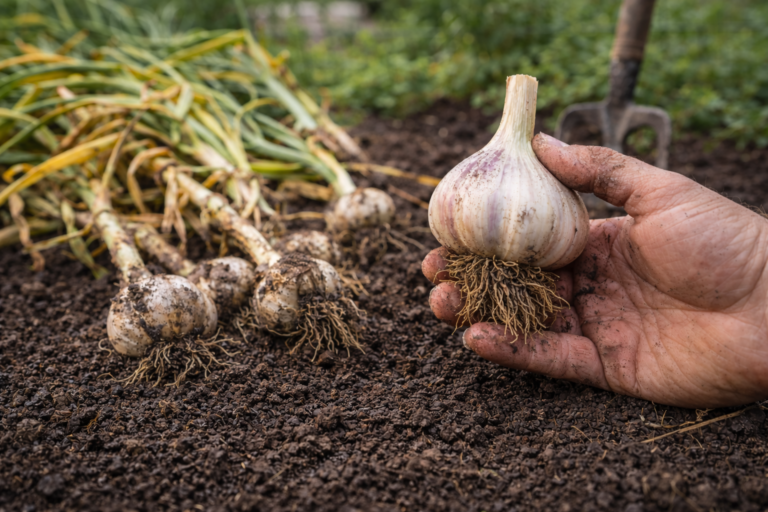
Harvesting garlic at the right time is the difference between small bulbs and full, well-formed heads. If you harvest too early, bulbs remain underdeveloped. If you harvest too late, bulbs split and store poorly.
For maximum size, garlic should be harvested when about 40 to 60 percent of the leaves have turned brown, while the upper leaves are still green. This stage signals that the bulb has reached full development but has not yet begun to separate.
Below, you will learn exactly how to recognize the right moment.
Why Timing Matters for Bulb Size
Garlic bulbs grow underground while leaves above ground feed them energy. The longer healthy leaves remain active, the larger the bulb can become.
However, once too many leaves die, the protective outer layers begin to weaken. At that point, bulbs may split apart and lose storage quality.
Harvesting at the correct balance point ensures maximum size and proper storage.
The Best Visual Signs Garlic Is Ready
The most reliable indicator is leaf condition.
Lower Leaves Turning Brown
The bottom leaves begin drying first. This is normal and signals that the bulb is nearing maturity.
Upper Leaves Still Green
The top leaves should still be partly green. These leaves form the outer wrapper layers around the bulb.
If all leaves are brown, you likely waited too long.
About Half the Leaves Are Dry
When roughly half the plant has dried and the other half remains green, that is typically the ideal harvest window.
What Happens If You Harvest Too Early?
Harvesting too early leads to:
- Smaller bulbs
- Thin outer wrappers
- Reduced storage life
Bulbs may still be edible, but they will not reach their full size potential.
If unsure, it is usually better to wait a few extra days rather than harvest too soon.
What Happens If You Harvest Too Late?
Leaving garlic in the ground too long can cause:
- Bulbs to split apart
- Cloves to separate underground
- Thinner protective wrappers
- Poor storage performance
Split bulbs spoil faster and are more vulnerable to rot.
Size does not increase significantly after the proper maturity stage, so waiting too long does not usually improve yield.
Harvest Timing by Planting Season
Garlic maturity also depends on when it was planted.
Fall-planted garlic typically reaches harvest in late spring to early summer.
Spring-planted garlic usually matures in mid to late summer.
Weather conditions may shift this timing slightly, so always rely on leaf signs rather than calendar dates alone.
How to Test Before Harvesting the Entire Crop
If you are unsure whether it is time to harvest, test one plant first.
- Gently loosen soil around one bulb
- Lift it carefully
- Examine bulb size and wrapper thickness
If the bulb looks full and well-formed with distinct cloves under intact wrappers, it is ready.
If it looks small or underdeveloped, give the rest of the crop more time.
How to Harvest Garlic Properly
Never pull garlic straight from dry soil, as this can damage the stem.
Instead:
- Use a garden fork to loosen soil gently
- Lift bulbs carefully
- Avoid bruising or cutting the bulb
Damaged bulbs do not store well.
After Harvest: Why Curing Matters
Even perfectly timed harvests can fail if garlic is not cured properly.
After harvesting:
- Shake off loose soil
- Do not wash the bulbs
- Hang in a shaded, well-ventilated area
- Cure for 2 to 3 weeks
Proper curing locks in size and improves storage life.
Final Thoughts
Harvest timing is one of the most important factors in garlic bulb size. Watch the leaves carefully and aim for the stage where roughly half the plant has dried while the upper leaves remain green.
Harvest too early and you sacrifice size. Harvest too late and you risk split bulbs and poor storage quality. Rely on plant signals rather than calendar dates, and your garlic will consistently reach its full potential.
Frequently Asked Questions
Can garlic bulbs continue growing after leaves turn brown?
Very little additional growth happens once most leaves have turned brown. Waiting longer usually increases the risk of splitting rather than increasing size.
Does weather affect harvest timing?
Yes. Very hot weather can speed up leaf dieback, while cooler conditions can delay it. Always use leaf condition as your primary indicator instead of relying only on dates.
Should you stop watering before harvest?
Yes. Stop watering about two weeks before harvest. This allows bulbs to dry slightly in the soil and improves curing and storage quality.
How long can garlic stay in the ground after maturity?
Once mature, garlic should be harvested within one to two weeks. Leaving it longer increases the chance of bulb splitting and reduced storage life.