
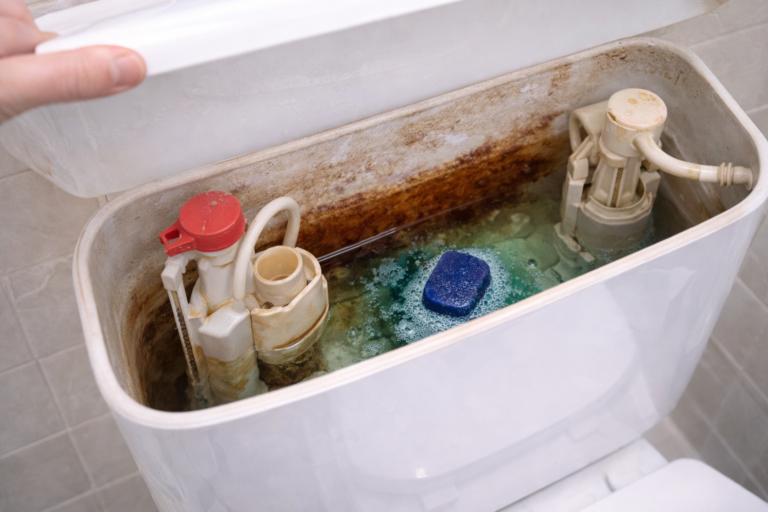
Cistern blocks are one of those cleaning products that seem almost too convenient.
Drop one in the tank, and every flush delivers a wave of blue, fresh-smelling water. The toilet looks cleaner, smells better, and you barely have to do anything. What is not to like?
Quite a lot, actually. Plumbers have been warning about cistern blocks for years, and the concerns are real.
This guide breaks down exactly what happens inside your toilet tank when you use these products, what the risks are, and what to use instead.
What Are Cistern Blocks Made Of?
Cistern blocks go by various names in the US: in-tank toilet cleaners, drop-in toilet tablets, tank cleaners, or blue toilet tablets. They sit inside the toilet tank and slowly dissolve, releasing cleaning agents into the water with every flush.
Their ingredients typically include a mix of:
- Sodium hypochlorite or bleach compounds for disinfecting
- Surfactants to reduce surface tension and clean the bowl
- Fragrances for the fresh scent
- Colorants (usually blue or purple dye)
- Binders that hold the tablet together and control dissolution rate
The bleach-based compounds are what cause most of the problems. These are caustic chemicals designed to kill bacteria and dissolve organic matter. They are effective in the bowl. In the tank, however, they are in constant contact with rubber, plastic, and metal parts that were not designed to withstand prolonged chemical exposure.
The Real Risks: What Cistern Blocks Do to Your Toilet
1. They Corrode the Rubber Flapper
The flapper is the rubber valve at the bottom of the tank that controls water flow into the bowl. It is probably the single most critical moving part in your toilet. When it seals properly, the tank holds water. When it fails, water leaks constantly from the tank into the bowl.
Prolonged exposure to bleach-based chemicals accelerates rubber degradation. The rubber becomes brittle, loses its flexibility, and eventually cracks or warps. A damaged flapper causes a running toilet that can waste up to 200 gallons of water per day according to the US Environmental Protection Agency. That translates to a significantly higher water bill month after month, plus the cost of a plumber or replacement parts.
A flapper that might last 5 to 7 years under normal conditions can fail in months when exposed to in-tank chemical cleaners.
2. They Can Block the Flush Valve
As a cistern block dissolves, it can break apart into chunks rather than dissolving evenly. Those chunks can lodge in the flush valve mechanism, preventing it from opening fully (causing a weak flush) or from closing properly (causing a running toilet). Cheaper tablets are especially prone to this problem.
3. They Corrode Metal Hardware
The bolts holding the tank to the bowl, the fill valve, and other metal components are not designed for constant chemical exposure. Bleach accelerates rust and corrosion on these parts. In as little as six months of regular cistern block use, bolts can rust to the point of needing replacement.
4. They Can Void Your Toilet Warranty
Many toilet manufacturers explicitly state in their warranty documentation that using drop-in tank cleaners or tablets voids the warranty. Check your toilet paperwork. If you have a newer toilet still under warranty, a cistern block causing a failed flapper could leave you paying for repairs out of pocket that would otherwise be covered.
5. Septic System Concerns
If your home uses a septic system, the bleach compounds from cistern blocks can kill the beneficial bacteria that break down waste in the tank. Over time this disrupts the balance of the septic system and can contribute to failures that are expensive to repair.
6. Air Quality and Pet Safety
Cistern blocks continuously off-gas chemical compounds into the bathroom air. In a small, poorly ventilated bathroom this adds up. The Asthma and Allergy Foundation of America notes that chemical fumes in the home can aggravate respiratory conditions. If pets drink from the toilet bowl, the chemicals in the water are a health risk for them.
Rim Blocks vs. Cistern Blocks: An Important Distinction
Not all toilet cleaning products carry the same risks. There is a meaningful difference between:
- Cistern blocks / in-tank tablets: Sit inside the water tank. This is the problem category. The chemicals are in constant contact with tank hardware.
- Rim blocks (rim hangers): Clip to the inside rim of the bowl, not the tank. They only release cleaner when flushed and never contact tank hardware. Much lower risk.
- Gel stamp discs: Stick directly to the inside of the bowl. Release cleaner with each flush without ever entering the tank. Safest option of the drop-in product types.
If you want the convenience of a product that freshens the toilet with every flush, rim blocks and gel disc stamps are far safer choices than cistern blocks.
What Plumbers Actually Recommend
The consensus among professional plumbers is consistent: keep products out of the tank. The tank is where the mechanical components live, and those components are not designed to be bathed in cleaning chemicals around the clock.
For keeping your toilet clean with minimal effort, the standard professional advice is:
- Weekly brush and bowl cleaner: Takes two minutes and keeps buildup from getting out of hand
- Rim block or gel disc if you want between-flush freshness: These sit in the bowl, not the tank
- Monthly deep clean with a dedicated toilet cleaner, limescale remover, or a baking soda and vinegar treatment
- Quarterly check of tank internals: Lift the lid once in a while to check for any visible buildup or early signs of corrosion
If You Already Have a Cistern Block In There
Take it out. Put on rubber gloves, open the tank, remove the block, and flush the tank several times to dilute and clear any chemical residue. Then inspect the flapper. Press down on it and see if it creates a firm seal. Run the toilet for 15 minutes and check whether the tank is running continuously. If it is, the flapper may already be damaged and needs replacing. A new flapper costs around $10 at any hardware store and takes about 10 minutes to install.
Frequently Asked Questions
Are in-tank toilet tablets the same as cistern blocks?
Yes. The terms are used interchangeably. In the US they are often sold as “in-tank toilet cleaners” or “drop-in toilet tablets.” Products like 2000 Flushes and Clorox Automatic Toilet Bowl Cleaner are common US examples. All carry the same risks to rubber and plastic tank components.
My toilet has been running since I started using a cistern block. Are they related?
Very likely yes. A running toilet almost always means the flapper is not sealing properly. Bleach-based cistern blocks accelerate rubber degradation, causing flappers to fail. Remove the block, replace the flapper, and the problem should resolve.
Is there a safe in-tank option at all?
Enzyme-based or oxygen-bleach tablets marketed as “septic safe” are gentler on rubber than chlorine bleach tablets, but no in-tank product is completely risk-free over the long term. Rim blocks and gel disc stamps are always the safer choice because they never contact tank hardware.
How often should I actually clean my toilet if I do not use a cistern block?
A quick brush-and-cleaner sweep twice a week takes about 90 seconds and prevents almost all staining and buildup. A deeper clean including under the rim, the base, and the outside once a week keeps everything spotless. Monthly use of a limescale remover keeps hard water deposits from building up.
Can I use baking soda and vinegar in the toilet tank?
Yes, and this is a great natural option for periodic tank cleaning. Pour one cup of white vinegar into the tank, let it sit for 30 minutes, and flush. This descales the inside of the tank and neutralizes odors without harming rubber or metal components. Do not leave it sitting for hours at a stretch.
Related Articles: