
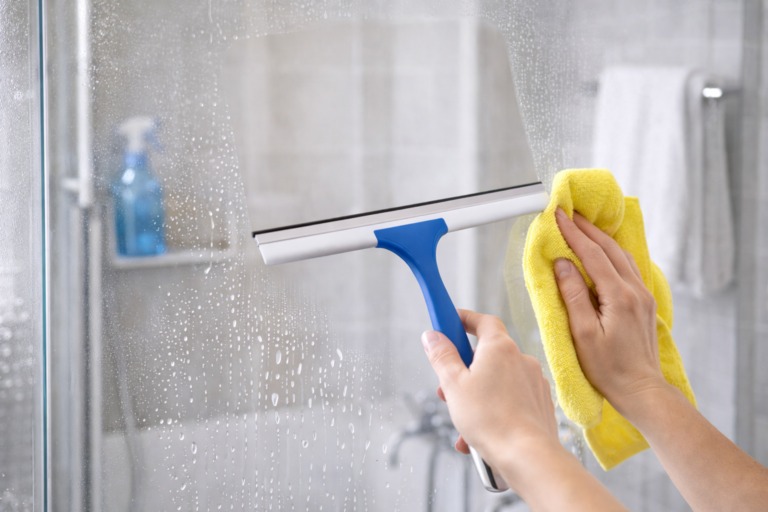
A cloudy, streaky shower screen can make an otherwise clean bathroom look grubby. The problem is not just aesthetics — if hard water deposits are left long enough, they can etch into the glass and become very difficult to reverse.
This guide covers every method from quick weekly maintenance to tackling years of neglected buildup, so you can find exactly what your shower screen needs right now.
What Is Actually on Your Shower Screen?
Before you can clean it properly, you need to identify what you are dealing with. Run a finger across the glass. Different textures tell you different things:
- Slimy or waxy feel: Soap scum — formed when soap reacts with minerals in hard water and oils from your body
- Rough or gritty texture: Mineral deposits from hard water (calcium and magnesium)
- Looks foggy even after cleaning: Could be etching — tiny surface damage from mineral acids
Soap scum sits on top of the glass and responds well to cleaning. Mineral deposits need acidic cleaners to dissolve. Etching is permanent damage and cannot be cleaned away, only polished.
The Weekly Method: Vinegar and Dish Soap Spray
This is the best routine cleaner for maintaining a spotless screen between deep cleans. Keep a spray bottle in the shower and use it once a week.
Make the solution: Mix 1 cup of white distilled vinegar with 1 cup of warm water and 1 tablespoon of dish soap in a spray bottle.
- Spray the entire screen generously, top to bottom.
- Let it sit for 10 to 15 minutes. The vinegar breaks down mineral deposits while the dish soap cuts through soap scum.
- Scrub gently with a non-scratch sponge or microfiber cloth in circular motions.
- Rinse thoroughly with warm water.
- Squeegee from top to bottom in straight strokes.
- Buff dry with a dry microfiber cloth.
The Most Important Step: The final drying step prevents new water spots from forming immediately after cleaning. Never skip it.
For Stubborn Hard Water Stains: Baking Soda Paste
When the vinegar spray alone is not shifting mineral buildup, baking soda paste adds gentle abrasion to the mix.
- Mix baking soda with just enough water to form a thick paste.
- Apply the paste directly onto the stained areas using your fingers or a cloth.
- Let it sit for 15 minutes.
- Scrub in circular motions with a non-scratch sponge.
- Rinse well and dry immediately.
For a more powerful variation, apply the baking soda paste first and then spray vinegar over the top. The fizzing reaction helps lift calcified deposits.
For Heavy Buildup: CLR or Lime-A-Way
If you are dealing with thick, white, crusty buildup that has been building for months — especially on glass shower doors in hard water areas — you need a dedicated limescale remover.
- CLR Calcium, Lime and Rust Remover is widely available and highly effective
- Lime-A-Way is another strong option that works quickly
Apply directly to the glass with a cloth or sponge, let it dwell for 5 to 10 minutes (no longer — acids can damage seals), scrub, and rinse extremely thoroughly. Never let these products sit on chrome fixtures for more than a few minutes.
For the Worst Case: Fine Steel Wool (0000 Grade)
This sounds alarming, but 0000-grade (ultra-fine) steel wool will not scratch regular glass — it is actually a technique used by professional window cleaners. It is for severe mineral deposits that have been on the glass for a long time and resisted every other method.
- Wet the glass and the steel wool thoroughly first
- Rub gently in circular motions
- Rinse frequently to check progress
- Never use on coated glass, tinted glass, or frameless doors with special finishes — check with the manufacturer first
What to Do After Every Shower: The 30-Second Routine
This single habit is the most effective way to prevent shower screens from ever getting bad in the first place. It takes about 30 seconds per shower.
- Keep a squeegee hanging in your shower.
- After your last rinse, run the squeegee over the entire screen from top to bottom in straight strokes.
- Give the screen a quick wipe with a dry cloth if you have one handy.
By removing the water before it evaporates and deposits minerals, you eliminate the root cause of the buildup entirely. Once this is a habit, you will find that deep cleaning is needed far less often.
Preventing Buildup Long-Term
- Apply a hydrophobic glass sealant (like Rain-X or a dedicated shower glass protector) every few months — water beads and rolls off treated glass instead of evaporating and leaving minerals
- Switch from bar soap to liquid body wash — bar soap creates far more soap scum
- Improve bathroom ventilation by running the fan during and after showers to reduce humidity
- If your area has very hard water, a shower head filter can reduce mineral content significantly
What About Shower Door Tracks?
Tracks accumulate the worst buildup because water pools there. Use an old toothbrush dipped in a baking soda and vinegar solution to scrub the track. A cotton swab or Q-tip works well for the corners. Rinse with a wet cloth and dry.
Frequently Asked Questions
Q: How do I know if my shower screen is etched or just dirty?
Clean the screen thoroughly with vinegar and a baking soda paste. If it still looks foggy or hazy after a thorough clean, it may be etched. Etching is surface damage — tiny pits caused by minerals or acids — and cannot be cleaned, only polished. A glass polishing kit with cerium oxide can improve it.
Q: Can I use Windex on a shower screen?
Windex is fine for removing water spots and light cleaning, but it is not strong enough to cut through soap scum or mineral deposits. Use it as a finishing step after cleaning with vinegar or baking soda.
Q: How often should I deep clean my shower screen?
With the daily squeegee habit, a full deep clean every 2 to 4 weeks is usually enough. Without the squeegee habit, you may need to deep clean weekly to prevent mineral buildup from hardening.
Q: My shower screen has a coating on it. Can I still use vinegar?
Check with the manufacturer. Some coatings are acid-sensitive and vinegar can damage them. Use a mild dish soap solution or a product specifically approved for coated glass instead.
Related Articles: