
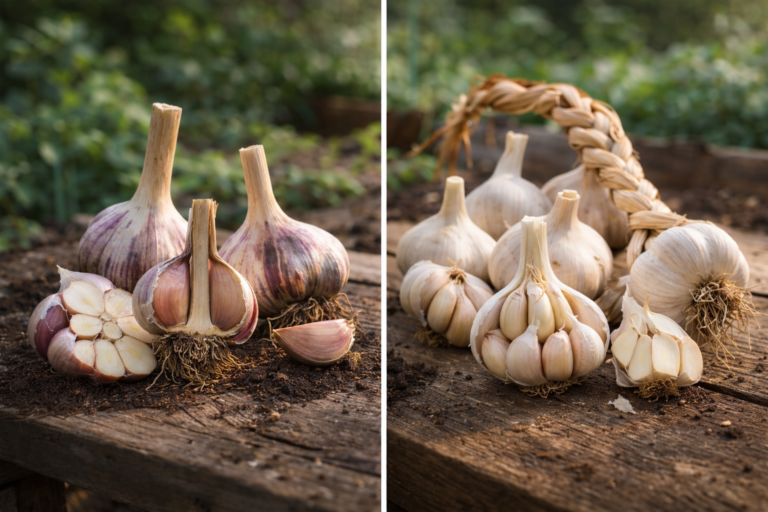
If you are planning to grow garlic at home, one of the first decisions you may need to make is whether to plant hardneck or softneck garlic.
If you live in a cold climate and want stronger flavor with larger, easy-to-peel cloves, hardneck garlic is usually the better choice. If you live in a warm region and prefer longer storage life with more cloves per bulb, softneck garlic is typically more reliable.
Both types grow well under the right conditions, but climate, storage needs, and flavor preference should guide your decision.
Below, we break down the differences in detail so you can choose the best garlic variety for your garden with confidence.
What Is Hardneck Garlic?
Hardneck garlic produces a stiff central stalk that grows through the middle of the bulb. This stalk eventually forms a curly flower shoot known as a scape.
Hardneck varieties are generally more cold-hardy and closer to wild garlic types.
Key Characteristics of Hardneck Garlic
- Produces edible scapes
- Stronger, more complex flavor
- Fewer cloves per bulb
- Larger individual cloves
- Better suited for cold climates
Hardneck garlic is often preferred by cooks who want bold flavor and easy peeling.
What Is Softneck Garlic?
Softneck garlic does not produce a rigid central stalk. Instead, it forms flexible leaves that can be braided after harvest.
Softneck varieties are the most commonly sold type in grocery stores because they store longer and often produce more cloves.
Key Characteristics of Softneck Garlic
- No scape production
- Milder flavor
- More cloves per bulb
- Smaller individual cloves
- Better suited for warm climates
- Longer storage life
If you live in a mild or hot region, softneck garlic is usually more reliable.
Climate Differences: Which Grows Better Where?
Climate is one of the most important deciding factors.
Hardneck garlic performs best in regions with cold winters. It requires a period of cold exposure, known as vernalization, to form proper bulbs. In warm climates without sufficient cold, hardneck garlic may produce small or poorly formed bulbs.
Softneck garlic tolerates warmer climates much better. It does not require as much cold exposure to develop bulbs, making it ideal for southern or tropical regions.
If your winters regularly drop below freezing, hardneck is an excellent choice. If you rarely experience frost, softneck is typically safer.
Flavor Comparison
Hardneck garlic generally has a stronger, more complex flavor. It is often described as richer and more aromatic, making it popular for roasting and specialty dishes.
Softneck garlic tends to have a milder, more classic garlic taste. It works well for everyday cooking and commercial production.
If intense flavor is your priority, hardneck may be the better option. If you prefer something milder and versatile, softneck works well.
Storage Life Differences
Storage life is where softneck garlic stands out.
Softneck garlic can last six to eight months or longer when cured properly.
Hardneck garlic usually stores for three to five months before cloves begin to dry out.
If you want garlic that lasts through winter without sprouting, softneck has a clear advantage.
Clove Size and Yield Differences
Hardneck garlic typically produces fewer cloves per bulb, often between six and ten. However, the cloves are larger and easier to peel.
Softneck garlic usually produces more cloves per bulb, sometimes ten to twenty, but they are smaller.
Both types can produce excellent yields when planted in good soil with proper spacing and fertilization.
Maintenance Differences
Hardneck garlic requires one additional step.
Removing Scapes
When the curly scapes appear, they should be removed. Cutting off scapes helps redirect energy into bulb growth and increases size.
Softneck garlic does not produce scapes, making it slightly lower maintenance.
Aside from this difference, both types require similar planting depth, watering schedules, and fertilization practices.
Can You Grow Both Types Together?
Yes, you can grow both hardneck and softneck garlic in the same garden if your climate allows. Planting both types lets you compare flavor, storage performance, and yield side by side.
Many gardeners experiment with both during their first season before choosing a long-term preference.
Which Garlic Is Best for Beginners?
If you live in a cold climate and want bold flavor, hardneck is a strong choice.
If you live in a warm climate or want longer storage with less maintenance, softneck is usually easier.
For most growers, climate becomes the deciding factor.
Final Thoughts
Both hardneck and softneck garlic can produce excellent harvests when grown in the right conditions. The best choice depends on your climate, storage needs, and flavor preference.
If possible, try planting both and compare the results in your own garden. Over time, you will quickly see which type performs best in your soil and environment.
Frequently Asked Questions
Does hardneck garlic produce bigger bulbs than softneck?
Hardneck garlic often produces larger individual cloves, but not necessarily larger total bulbs. Softneck bulbs can be equal or even larger depending on soil quality and growing conditions.
Can softneck garlic survive freezing temperatures?
Softneck garlic can tolerate light frost, but it is generally less tolerant of extreme cold than hardneck varieties. In very cold regions, heavy mulching is recommended for protection.
Why is hardneck garlic sometimes more expensive?
Hardneck garlic often costs more because it produces fewer cloves per bulb and has a shorter storage life. Its stronger flavor and scape production also make it more desirable in specialty markets.
Can you braid hardneck garlic?
No. Hardneck garlic forms a stiff central stalk that cannot be braided. Only softneck garlic can be braided due to its flexible stems.
Which type of garlic is best for roasting?
Hardneck garlic is often preferred for roasting because of its deeper and more complex flavor, though both types can be used successfully.