
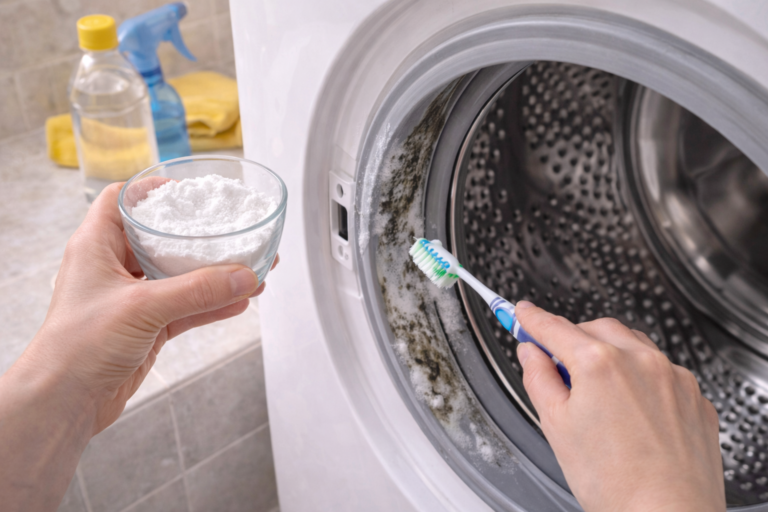
You pull open the front-loader door and catch a musty, earthy smell. You look at the thick rubber gasket around the door and find the folds packed with black mold and slimy residue.
Even worse, you wonder if that smell has been transferring to your freshly washed laundry.
It almost certainly has. Mold in the door seal is the number one cause of front-load washer odors. The good news is it is fixable with products you have at home, and the steps below will clear it completely rather than just masking it.
Why Front-Load Washers Are Prone to Mold
The design that makes front-loaders efficient is also what makes them mold magnets. The door seal is a thick rubber gasket with multiple folds and a deep crevice at the bottom that holds water after every cycle. Combined with the airtight seal needed to prevent leaks, the gasket stays wet and warm in an enclosed space long after the wash is done.
This is essentially perfect mold habitat. Add lint, detergent residue, and fabric softener buildup that gives mold extra organic material to feed on, and you have a persistent problem that gets worse over time without active management.
Top-loaders rarely have this issue because their drum opening allows moisture to evaporate freely between uses.
What You Will Need
- White vinegar (distilled)
- Baking soda
- Hydrogen peroxide (3 percent from a drugstore)
- Old toothbrush or small scrubbing brush
- Rubber gloves
- Microfiber cloths or old rags
- Optional: diluted bleach solution (1 part bleach to 10 parts water) for severe mold
- Optional: commercial mold remover gel if mold is deeply embedded in the rubber
Step-by-Step: Cleaning Mold from the Door Seal
Step 1: Pull Back All the Rubber Folds
The mold is worst in the hidden crevices. Put on rubber gloves and work all the way around the seal, pulling back each fold as you go. You will likely find black or dark brown buildup concentrated at the bottom of the gasket where water pools, and inside the folds along the sides.
This visual inspection tells you how bad the problem is. Light surface mold can usually be cleaned in one session. Deep, ingrained black staining in the rubber may need repeated treatments or eventually a seal replacement.
Step 2: Wipe Down Visible Mold
Soak a microfiber cloth in straight white vinegar. Wipe firmly around the entire gasket, getting into every fold. The vinegar starts killing mold at the root, not just on the surface.
Why vinegar over bleach for this step? Bleach kills mold spores on non-porous surfaces but only works on the surface of porous materials like rubber. Vinegar penetrates into porous rubber and kills the mold root structure, reducing the chance of rapid regrowth. Bleach leaves the stain and active mold roots intact below the surface layer.
Step 3: Apply a Baking Soda Paste for Scrubbing
Mix baking soda with just enough water to make a thick paste. Apply it to all moldy areas with your fingers or a cloth. Then use the toothbrush to scrub firmly into every fold and crevice. The mild abrasion of baking soda physically lifts the mold off the rubber surface.
After scrubbing, spray straight vinegar over the paste. The fizzing reaction does additional lifting work. Let it sit for 10 to 15 minutes.
Step 4: Wipe Clean and Inspect
Wipe all the paste and mold residue away with a damp cloth. Rinse the cloth frequently so you are not just smearing mold around. Pull back every fold again and inspect. Most light to moderate mold should be gone at this point.
Step 5: For Stubborn Black Staining, Use a Bleach Solution
If black staining persists after the vinegar and baking soda treatment, a diluted bleach solution is the next step. Mix 1 part household bleach to 10 parts water. Soak old rags or paper towels in the solution and pack them into the moldy areas of the gasket. Leave them in place for 30 minutes to several hours.
After removing the rags, scrub with the toothbrush and wipe clean. Rinse the gasket thoroughly with plain water.
Do Not Mix: Never apply bleach solution on top of vinegar without rinsing first. Combining bleach and vinegar releases chlorine gas. Rinse the gasket with clean water between methods.
Step 6: Run a Hot Cleaning Cycle
After cleaning the gasket, run an empty wash cycle on the hottest setting available. Add 2 cups of white vinegar to the drum directly and 2 tablespoons of baking soda to the detergent drawer. This flushes out the machine interior and eliminates any mold spores that have spread into the drum, hoses, or drum seals.
Alternatively, use a dedicated washing machine cleaning tablet like Affresh or OxiClean Washing Machine Cleaner dropped into the drum. Run monthly to maintain the machine.
Step 7: Dry Everything Completely
After the cleaning cycle finishes, open the door wide and use a dry microfiber cloth to wipe down the entire gasket, including every fold. Leave the door fully open for at least 2 hours. The goal is to get every surface completely dry before closing up.
When the Stain Stays Even After Cleaning
Sometimes the black color in the rubber does not go away even after thorough cleaning. This can mean one of two things:
- The mold has been killed but has left a permanent dye in the rubber. The staining is cosmetic and the mold is no longer active. You can confirm by rubbing a dry white cloth across the area. If no black color transfers, the mold is dead and you are dealing with a stain only.
- The mold is deeply embedded in the rubber and cannot be fully removed with household cleaners. In this case, a commercial mold remover gel specifically designed for washing machine gaskets will penetrate deeper than sprays or pastes.
If neither approach works and the mold keeps coming back rapidly, it may be time to replace the door seal gasket. Replacement seals for most major brands are available on Amazon for $20 to $50 and installation videos are available on YouTube for most washer models.
How to Stop Mold Coming Back
- Leave the washer door ajar after every cycle without exception. This is the single most effective prevention step.
- Wipe the gasket dry with a cloth after every wash. Takes 30 seconds and removes the standing water that feeds mold.
- Switch from liquid detergent to powder or pods. Liquid detergent leaves a residue film in the gasket that mold feeds on.
- Do not leave wet laundry sitting in the machine. Remove it immediately and transfer to the dryer.
- Run a hot cleaning cycle with vinegar or a machine cleaning tablet once a month.
- Use only HE (high-efficiency) detergent in HE machines. Non-HE detergent creates excessive suds that leave more residue throughout the machine.
- Check the gasket weekly and wipe it down before mold has a chance to establish.
Frequently Asked Questions
Is the black stuff on my washing machine seal dangerous?
It can be. The black mold in washing machine seals is commonly Cladosporium or Aspergillus species. For most healthy adults it is a nuisance rather than an emergency, but for people with asthma, respiratory conditions, or compromised immune systems, prolonged exposure to washing machine mold can aggravate symptoms. Clean it promptly and keep the machine dry between uses.
Can I use undiluted bleach directly on the rubber seal?
It is not recommended. Undiluted bleach can degrade rubber over time. A diluted solution of 1 part bleach to 10 parts water is effective without causing accelerated damage to the gasket material. For the seal specifically, vinegar and baking soda are actually more effective at killing mold at the root level.
How often should I clean the washing machine door seal?
A quick wipe with a damp cloth after every wash prevents buildup entirely. A full cleaning with vinegar and baking soda every 2 to 4 weeks keeps the seal in good condition. If mold is already visible, clean it immediately and then move to the regular maintenance schedule.
My clothes smell musty even after washing. Is the gasket the cause?
The gasket is the most common cause of musty-smelling laundry from front-loaders, but it is not the only one. Also check the detergent drawer (mold grows there too), and run a hot cleaning cycle to flush out the drum and hoses. If the smell persists after cleaning everything, the drain pump filter may also be harboring debris.
How do I know if I need to replace the door seal?
If the gasket has visible cracks or tears, is leaking water during cycles, or if mold staining cannot be removed after thorough cleaning and keeps returning within days, replacement is the best option. Most front-loader door seals are available online and replacement is a DIY project with a screwdriver and about an hour of time.
Related Articles: