
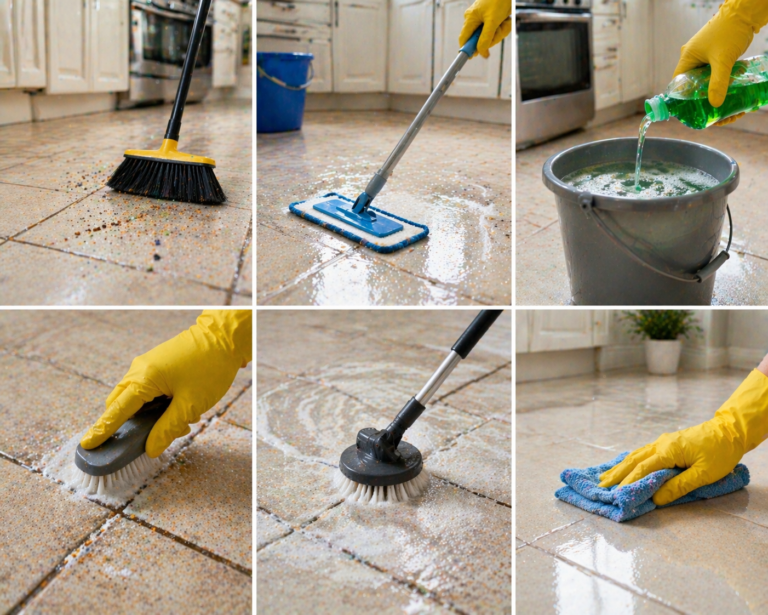
The kitchen floor gets it worse than any other floor in the house.
Cooking oil splatters, food drops, muddy shoes, spilled drinks, and underneath it all, the relentless accumulation of grease in the grout that no regular mop seems to touch.
The good news: tiled kitchen floors are among the most durable and cleanest flooring options available, when you know how to clean them properly.
This guide covers the complete routine for ceramic and porcelain kitchen tile floors, how to tackle grease and stubborn stains by type, how to get the grout genuinely clean, and how to keep everything looking great long-term.
What Type of Kitchen Tile Do You Have?
Most kitchen floors are either ceramic or porcelain. Both are clay-based and can be cleaned in essentially the same way, but there are a few important distinctions:
- Glazed ceramic and porcelain: The most common type. Smooth, stain-resistant surface. Easy to clean but can be scratched by abrasive pads.
- Unglazed ceramic or porcelain: Rougher, more rustic surface. More porous than glazed tiles, absorbs grease and stains more readily. Should be sealed and cleaned more carefully.
- Natural stone (slate, travertine, limestone): Requires completely different care. Never use vinegar, bleach, or acid on natural stone. If this is what you have, seek stone-specific cleaning guidance.
If you’re unsure, pour a few drops of water on the tile. If it beads up, the tile is glazed or sealed. If it soaks in, the tile is unglazed and porous.
The Daily Habits That Make Weekly Cleaning Much Easier
Most kitchen floor cleaning problems are avoidance problems. A quick daily sweep prevents the grinding-in of debris that makes grease stains so hard to remove.
- Sweep or vacuum daily: Hair, crumbs, and grit on the floor get ground into the tile and grout by foot traffic. 60 seconds with a soft-bristled broom or dust mop makes the weekly clean dramatically easier.
- Mop up spills immediately: Grease and acidic liquids (vinegar, juice, wine) can stain grout and dull tile finishes if left. Blot spills immediately and wipe the area clean.
- Use a kitchen mat near the stove: Catches oil splatter before it lands on the floor and gets ground in by foot traffic.
- Remove shoes at the door: Outdoor dirt, grit, and chemicals tracked in on shoes are a major source of floor contamination.
The Weekly Cleaning Routine (Ceramic and Porcelain)
Step 1: Sweep or Vacuum
Clear the floor of all loose debris before any wet cleaning. Using a mop on a gritty floor drags abrasive particles across the tile surface — scratching glazed tiles over time and grinding grit into grout.
Use a soft-bristled broom or vacuum set to hard floor mode. Don’t use the standard rotating brush bar — it can scratch tile.
Step 2: Mop with a Mild Cleaning Solution
Fill a bucket with warm water. Add your cleaner — less is more here.
Good options include:
- A few drops of dish soap — effective and gentle on grout
- A pH-neutral floor cleaner like Bona Hard-Surface Floor Cleaner or Method Floor Cleaner
- 1/2 cup of white vinegar per gallon of water — for cutting through light grease (don’t use on natural stone or regularly on unsealed grout)
Use a microfiber mop and wring it out thoroughly. The mop should be damp, not soaking wet. Excessive water sits in grout and deteriorates it over time.
Work from the farthest corner back to the door. Change the water if it becomes visibly dirty.
Step 3: Rinse
Rinse with a clean mop and plain water. This removes any soap residue that would otherwise dry on the tile and create a dull film that attracts more dirt.
| 💡 Pro Tip: This rinsing step is what most people skip — and it’s why their tile floors look perpetually dingy even after mopping. Always rinse with plain water after using any soapy cleaner. |
Step 4: Dry
Let the floor air dry with windows or doors open to aid airflow. In a kitchen, fans help speed this up. If you have polished tiles, towel-dry or buff with a microfiber cloth to prevent water spots.
Removing Grease from Kitchen Tile Floors
Grease is the kitchen floor’s worst enemy — and regular mopping often just spreads it around rather than removing it.
The key is using a cleaner that can break down the fat molecules: dish soap (designed specifically for this), a degreaser, or a baking soda paste.
Method: Hot Water + Dish Soap (Fresh Grease)
- As soon as possible, blot excess grease with a paper towel. Don’t smear it.
- Mix hot water with a generous squirt of dish soap in a bucket.
- Apply to the greasy area with a mop or sponge.
- Let it sit for 5 minutes.
- Scrub with a soft-bristled brush if needed.
- Rinse with clean water and dry.
Method: Baking Soda (Dried or Baked-On Grease)
- Sprinkle baking soda generously over the greasy area.
- Add just enough warm water to make a paste.
- Spread the paste and leave for 15–20 minutes.
- Scrub with a stiff brush in circular motions.
- Wipe up the paste and rinse the area thoroughly.
Method: Degreaser Spray (Heavy Grease Buildup)
For areas near the stove with baked-on, layered grease buildup, a dedicated kitchen degreaser is the most effective solution.
Good options include:
- Zep Heavy-Duty Citrus Degreaser — excellent on tile and safe for grout
- Simple Green All-Purpose Cleaner (diluted 1:10) — effective and relatively safe for grout
- Krud Kutter Kitchen Degreaser — powerful on cooking grease
- Spray the degreaser directly on the heavily greased area.
- Let it sit for 5–10 minutes (follow label instructions — times vary by product).
- Scrub with a stiff brush.
- Rinse thoroughly with clean water — degreasers leave residue if not fully rinsed.
| ⚠️ Warning: Always test any commercial degreaser on an inconspicuous area first. Some products can lighten or dull certain tile finishes if left too long. |
Tackling Other Common Kitchen Floor Stains
Coffee and Tea
Make a paste from baking soda and water. Apply, let sit 10 minutes, scrub and rinse. For persistent staining, try hydrogen peroxide (3%) applied and left for 5 minutes before scrubbing.
Wine and Juice
Blot immediately — don’t wipe and spread. Apply dish soap and warm water quickly. Dried wine stains on grout can often be removed with a baking soda paste left for 30 minutes.
Rust Stains
Bar Keepers Friend (powder form) made into a paste is the most effective DIY rust remover on tile. Apply, wait 1 minute, scrub, rinse immediately. Never use chlorine bleach on rust — it can permanently set the stain.
Hard Water Deposits (White Chalky Residue)
White vinegar diluted 50/50 with water, applied and left for 5–10 minutes, dissolves calcium and limescale deposits. Scrub and rinse.
How to Deep Clean Kitchen Floor Grout
The grout between kitchen tiles is where the real grime hides. Grout is porous and absorbs grease, food coloring, and bacteria — and standard mopping barely touches it.
Deep cleaning grout separately makes an enormous difference to how clean the floor looks overall.
Method 1: Baking Soda + Dish Soap (Regular Deep Clean)
- Mix 3/4 cup baking soda with 1/4 cup dish soap and enough water to form a paste.
- Apply to grout lines with an old toothbrush or a dedicated grout brush.
- Scrub firmly along the grout lines.
- Let the paste sit for 15 minutes.
- Scrub again, then rinse with clean water.
Method 2: Baking Soda + Hydrogen Peroxide (Stained Grout)
- Mix 1/2 cup baking soda with 1/4 cup hydrogen peroxide and 1 teaspoon dish soap.
- Apply to grout and leave for 10 minutes.
- Scrub with a stiff brush and rinse clean.
This is especially effective on grout that’s gone grey or has mold staining.
Method 3: Oxygen Bleach / OxiClean (Heavily Stained White Grout)
- Mix OxiClean powder with hot water to make a paste (consistency of peanut butter).
- Apply to grout lines and cover with damp paper towels to keep it from drying.
- Leave for 30 minutes to 1 hour.
- Scrub with a grout brush and rinse thoroughly.
| 💡 Pro Tip: After cleaning and drying, apply a grout sealer (such as TileLab Grout & Tile Sealer) to all grout lines. This fills the pores and dramatically slows future staining. Reapply every 1–2 years. |
| 📺 Recommended YouTube Search Search YouTube for: “how to clean kitchen tile floor grout deep clean” Watching a step-by-step video alongside this guide can make the process much easier to follow. |
What About the Flour Trick for Grease?
You may have come across advice to sprinkle flour on greasy kitchen tiles to absorb the grease before cleaning.
Does it work? For fresh grease spills — yes, flour (or cornstarch, or even dry baking soda) absorbs oily residue from tile surfaces before it smears during mopping. Sprinkle it on, leave for 10–15 minutes, sweep up, then clean normally.
For dried, ground-in grease or grout grease — no. Flour does nothing for embedded grease in grout. Use the degreaser or baking soda paste methods for those.
Keeping Your Kitchen Floor Tiles Looking Their Best Long-Term
- Sweep daily: The single most effective habit for tile floor maintenance.
- Mop weekly: Use the right dilution — too much soap makes things worse.
- Deep clean grout monthly: Or at minimum every 6–8 weeks.
- Seal grout annually: If your grout is porous and untreated, it will continue to absorb stains no matter how well you clean.
- Place mats strategically: In front of the stove, at the sink, and at entryways.
- Avoid dragging furniture: Always lift chairs and tables — dragging can chip tile edges and scratch glazed surfaces.
Frequently Asked Questions
What’s the best cleaner for ceramic kitchen floor tiles?
For regular weekly cleaning, a pH-neutral floor cleaner (like Bona or Method) or a small amount of dish soap in warm water works best. It cleans effectively without damaging grout or leaving residue. Avoid anything heavily acidic or alkaline for routine use.
How do I get my kitchen tile floor to shine?
Dull kitchen tiles are almost always caused by soap residue buildup. Strip it by mopping with a diluted vinegar solution (1/2 cup per gallon of water), rinsing thoroughly with plain water, then buffing dry with a microfiber cloth. The shine is still there — it’s just buried under residue.
How often should I mop kitchen tile floors?
Weekly mopping is appropriate for most kitchens. High-cooking households (daily cooking, multiple people) may benefit from mopping twice a week. The daily sweep is non-negotiable regardless of mopping frequency.
Can I use a steam mop on kitchen tile floors?
Yes, steam mops work very well on ceramic and porcelain kitchen tile. The heat cuts through grease without chemicals and is excellent on grout. Avoid steam mops on natural stone, unsealed floors, or any floor where the adhesive or grout might be compromised.
Why does my kitchen floor feel sticky after mopping?
Stickiness after mopping almost always means too much cleaning product was used or it wasn’t rinsed out properly. Use less detergent than you think you need, and always follow with a rinse mop using plain water. If it’s an ongoing issue, a full strip using a diluted vinegar wash followed by thorough rinsing will reset the floor.
How do I clean grout without scrubbing?
Apply an OxiClean paste (or a commercial oxygen bleach grout cleaner) to the grout and leave it for 30–60 minutes. The chemical action loosens the embedded grime, significantly reducing the scrubbing needed. For ongoing maintenance, sealing grout keeps it clean with standard mopping.
Related Articles: