
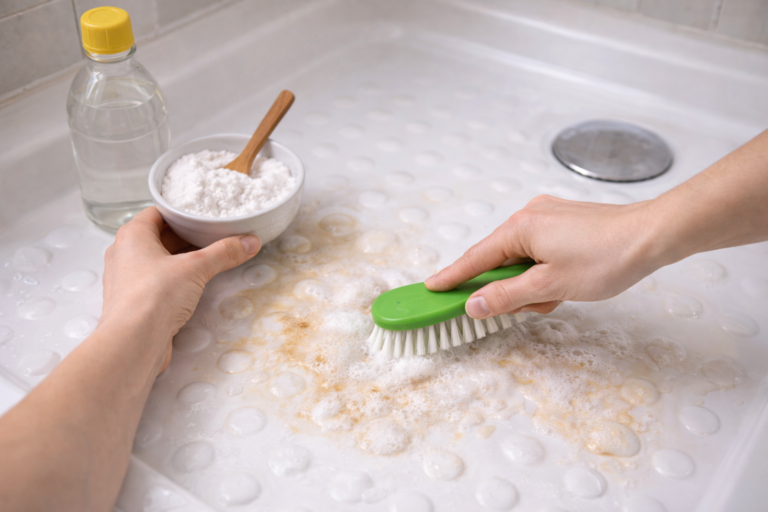
The shower tray is one of the most overlooked cleaning surfaces in the bathroom. It sits at floor level, collects soap scum and shampoo residue every day, and the grout lines turn gray, then dark, then black over time.
Baking soda (bicarbonate of soda) is one of the most effective natural cleaners for shower trays because it is mildly abrasive, deodorizing, and works on most shower tray materials without causing damage.
This guide walks you through the full method and when to upgrade to stronger solutions.
What Type of Shower Tray Do You Have?
The material matters because it affects which cleaning methods are safe:
- Acrylic or fiberglass: Common in modern showers, prone to scratching — avoid harsh abrasives. Baking soda is fine; bleach in small amounts is fine.
- Stone resin: Very durable, generally scratch-resistant, responds well to baking soda.
- Ceramic or porcelain tile with grout: The grout is the main challenge. Baking soda and hydrogen peroxide work well here.
- Natural stone (marble, slate): Avoid vinegar and acidic cleaners entirely — they damage the stone. Stick to pH-neutral cleaners or baking soda paste with warm water only.
The Basic Baking Soda Method
This method works for routine cleaning and light staining on most shower tray types.
What you need: Baking soda, warm water, a scrubbing brush or old toothbrush, a non-scratch sponge.
- Wet the shower tray thoroughly with warm water.
- Sprinkle baking soda generously over the entire surface, focusing on grout lines and stained areas.
- Let it sit for 10 to 15 minutes. This gives the baking soda time to absorb odors and start loosening grime.
- Scrub the surface in circular motions with your sponge or brush. Use the toothbrush for grout lines.
- Rinse thoroughly with warm water.
- Dry with a cloth or leave to air-dry with the bathroom door open.
Baking Soda and Vinegar Method (Better for Grout)
Combining baking soda and vinegar creates a fizzing reaction that helps lift buildup from porous grout lines. This is one of the most effective natural methods for discolored grout.
Note: Do not use this method on natural stone shower trays. The vinegar acid damages marble, limestone, and travertine.
- Apply baking soda paste (baking soda mixed with just enough water to form a thick paste) along all the grout lines.
- Spray white vinegar over the baking soda. It will fizz immediately.
- Let the reaction work for 5 to 10 minutes.
- Scrub the grout lines firmly with a grout brush or old toothbrush.
- Rinse the entire tray with warm water.
- Dry and inspect. Repeat if needed for very dark grout.
Baking Soda and Hydrogen Peroxide (Best for Stained or Discolored Grout)
This is the most powerful natural grout cleaner tested in independent comparisons. The hydrogen peroxide has mild bleaching properties that lighten darkened grout, while the baking soda provides scrubbing action.
- Mix 1/2 cup baking soda with enough hydrogen peroxide to form a thick paste. Add a teaspoon of dish soap for extra degreasing power.
- Spread the paste along grout lines using a spoon or your fingers.
- Let it sit for 10 to 15 minutes.
- Scrub with a grout brush, working the paste deep into the grout.
- Rinse thoroughly and repeat if needed.
This combination tackles mildew staining, soap scum, and mineral deposits simultaneously.
For Tough Stains: Upgrade to OxiClean or Oxygen Bleach
When natural methods are not enough, oxygen bleach (like OxiClean) is a powerful yet relatively gentle option. It releases oxygen that penetrates and oxidizes stains without the harsh fumes or surface damage of chlorine bleach.
- Dissolve oxygen bleach powder in hot water according to the package directions.
- Pour or spread the solution along the grout lines until fully saturated.
- Let sit for 15 to 30 minutes.
- Scrub with a grout brush and rinse clean.
Oxygen bleach is safe on colored grout, unlike chlorine bleach which can fade it.
Cleaning Acrylic Shower Trays
Acrylic and fiberglass shower trays need gentle treatment. Avoid abrasive scourers, steel wool, or harsh chemical sprays. Stick to:
- Baking soda paste applied with a soft cloth, scrubbed gently with a non-scratch sponge
- A few drops of dish soap with warm water for everyday cleaning
- White vinegar diluted 50/50 with water for mineral deposits — apply with a cloth, wait 10 minutes, wipe clean
Never use bleach undiluted on acrylic. A heavily diluted bleach solution (1 tablespoon per gallon of water) is acceptable for occasional sanitizing.
Preventing Staining in the Future
- Dry the tray with a squeegee or cloth after each shower to prevent mineral deposits forming
- Spray grout lines with a 50/50 vinegar and water solution a few times a week to prevent buildup
- Seal grout lines every 6 to 12 months with a grout sealer to make them resistant to staining
- Switch to liquid body wash — bar soap leaves far more scum on shower trays
- Use a daily shower spray after each use to prevent soap and mineral buildup between cleans
Frequently Asked Questions
Q: Will baking soda scratch my shower tray?
Baking soda is a very mild abrasive and is safe for most shower tray materials including acrylic, stone resin, and ceramic tile. Avoid using it with a rough scourer pad on acrylic — use a soft cloth or non-scratch sponge instead.
Q: How do I get black grout lines white again?
The most effective natural method is baking soda and hydrogen peroxide paste. Apply it, let it sit for 15 minutes, scrub well, and rinse. For very deep staining, you may need to repeat this several times. If the grout is permanently stained, grout pen markers can restore the appearance without replacing it.
Q: How often should I deep clean my shower tray?
A full deep clean every 2 to 4 weeks, with a quick rinse and wipe-down after each shower. If your household has multiple people using the same shower, weekly deep cleans may be needed to keep grout from discoloring.
Q: Can I use a steam cleaner on my shower tray?
Yes, and steam cleaning is highly effective for grout — the hot steam penetrates deeply and kills mold and bacteria without chemicals. Make sure your shower tray material is compatible with heat. Avoid steam on natural stone.
Q: My shower tray has a non-slip texture and the grout is impossible to reach. Any tips?
A stiff grout brush is your best tool. For non-slip textured surfaces, apply baking soda paste and let it sit longer (20 to 30 minutes) before scrubbing to let the cleaner do the work. An electric toothbrush can also save a lot of effort on textured surfaces.
Related Articles: