
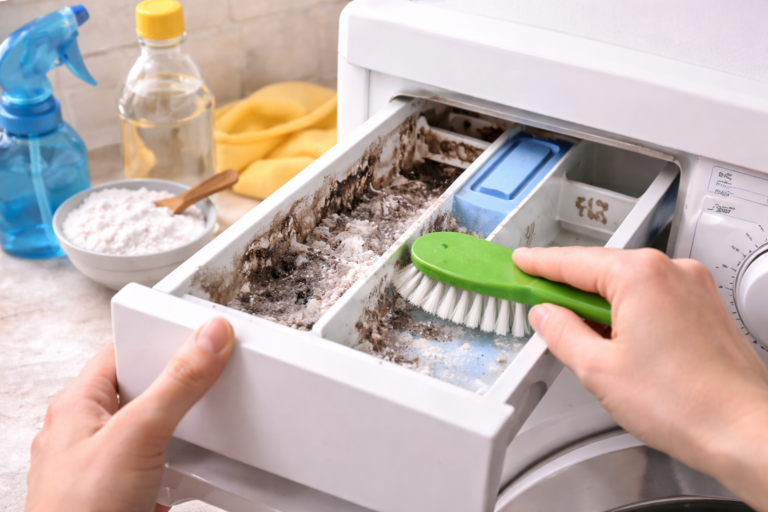
You pull out the detergent drawer to add your laundry pods and come face to face with black slime coating the inside.
It smells earthy, it looks terrible, and it is leaving your clothes smelling less than fresh even after a full wash cycle.
You are not alone. Mold in the washing machine detergent drawer is one of the most common laundry complaints, particularly with front-loading washers.
The good news is it is completely fixable in under an hour with things you already have at home.
Why Does Mold Grow in Washing Machine Drawers?
Understanding why it happens helps you prevent it from coming back. The detergent drawer sits in a damp, enclosed space. After every wash cycle, residual water and detergent residue remain in the drawer and the housing cavity behind it. With no airflow and warmth from the machine, mold spores find ideal growing conditions.
Front-load washers are particularly prone to this because the drum seal keeps moisture trapped inside the machine. Every time you close the drawer after a cycle, you are sealing in dampness. Add leftover fabric softener — which is notoriously sticky and slow to rinse out — and you have a perfect mold breeding ground.
Black mold in washing machines is not just cosmetic. It can transfer to your laundry, cause musty odors on clothes, and be a concern for household members with respiratory sensitivities.
What You Will Need
- White vinegar (distilled)
- Baking soda
- Old toothbrush or small scrubbing brush
- Rubber gloves
- Microfiber cloth or sponge
- Small bowl or spray bottle
- Optional: mild bleach solution (1 part bleach to 10 parts water) for severe mold
Step-by-Step: How to Clean Mold from Your Washing Machine Drawer
Step 1: Remove the Drawer Completely
Before you do anything, unplug the washing machine or ensure it is turned off. Most detergent drawers slide out after pressing a release tab at the back — usually a small button or lever in the softener compartment. Pull firmly once the tab is pressed. Check your machine manual if it is stuck; forcing it can crack the plastic.
Some drawers have removable inserts — little dividers for different detergent compartments. Pull those out too. They often harbor the worst buildup underneath.
Step 2: Soak the Drawer in Vinegar and Hot Water
Fill your bathroom sink or a large basin with hot water and add about a cup of white vinegar. Submerge the entire drawer and any removable inserts. Let it soak for at least 30 minutes. The vinegar is a mild acid that penetrates the porous black mold and starts breaking it up.
Why vinegar instead of bleach? Bleach kills mold on the surface but does not penetrate porous materials, which means mold returns faster. Vinegar actually kills mold at the root on porous surfaces, making it the better long-term option for drawer plastic.
Step 3: Scrub Every Crevice
After soaking, use your old toothbrush to scrub every corner, crevice, and compartment. Pay extra attention to:
- The siphon cap in the fabric softener compartment (that little pop-up piece)
- The undersides of any removable dividers
- The back wall of the drawer where buildup hides
- Any rubber seals or gaskets around the edges
Rinse and repeat if the mold is stubborn. For very heavy buildup, make a paste of baking soda and a small amount of water and scrub with that — the mild abrasive action helps lift what the vinegar soak has loosened.
Step 4: Clean the Drawer Housing (The Cavity Inside the Machine)
This is the part most people skip, and it is often where the worst mold hides. The housing — the slot the drawer slides into — has a ceiling, side walls, and a back that are constantly damp and almost never see daylight.
- Spray or wipe the inside of the housing with straight white vinegar.
- Let it sit for 15 minutes.
- Use your toothbrush or a flexible bottle brush to scrub the top, sides, and back of the cavity.
- For the tube at the back (where water and detergent flow through), put 1 tablespoon of baking soda into the cavity and then spray it with vinegar. The fizzing reaction will bubble down the tube and clear odor-causing residue.
- Wipe everything dry with a microfiber cloth.
Hard to Reach Spots: Wrap a microfiber cloth around a butter knife or use Q-tips to reach the top back corners of the housing. A flexible-neck bottle brush also works well for the tube.
Step 5: Clean the Rubber Door Seal
While you have the drawer out, check the rubber gasket around the door. This is another major mold hotspot. Pull back the folds of rubber and look for black spots. Wipe it down with vinegar on a cloth, scrubbing any black areas, then dry thoroughly.
Step 6: Run a Hot Cleaning Cycle
Reassemble the drawer and run an empty hot water cycle with either two cups of white vinegar in the detergent compartment, or a washing machine cleaning tablet dropped directly into the drum. This flushes out any remaining mold residue inside the machine and sanitizes the internal components.
Step 7: Let Everything Air Dry
Before you close the drawer fully, leave it partially open for at least an hour. Leave the machine door ajar as well. This allows airflow to dry out the housing completely.
How to Stop Mold Coming Back
The key is reducing the moisture and residue that feeds mold growth:
- Leave the drawer slightly open after every wash so moisture can escape
- Leave the machine door ajar after every cycle
- Switch from liquid detergent to powder or pods where possible — liquid detergent leaves far more sticky residue
- Run a hot cleaning cycle once a month with vinegar or a washing machine cleaner tablet
- Wipe the drawer housing dry once a week with a cloth
- Use the correct amount of detergent — overdosing leaves residue that feeds mold
- Avoid cold-water-only washes all the time — occasional hot washes help flush the machine
When to Use Bleach Instead
If the mold is severe and vinegar is not cutting through it, a diluted bleach solution (1 part bleach to 10 parts water) is effective. Spray it on, let it sit for 10 minutes, scrub, and rinse thoroughly. Do not mix bleach with vinegar — this creates chlorine gas. Use one or the other, not both.
Frequently Asked Questions
Q: Can mold in the washing machine make you sick?
Potentially yes, particularly if you have asthma, allergies, or a compromised immune system. Mold spores can transfer to your laundry and irritate respiratory systems. Black mold in particular should be cleaned promptly.
Q: How often should I clean my washing machine detergent drawer?
A full clean every month is recommended. A quick wipe-down after each wash is ideal. If you notice mold or odor building up, clean it immediately rather than waiting for your scheduled monthly clean.
Q: My drawer will not come out — what do I do?
Check your machine manual for the release mechanism. Most front-loaders have a tab in the softener compartment. If the drawer is genuinely stuck, try wiggling it left and right while pressing the tab. Never force it hard or you risk cracking the plastic.
Q: Why does my washing machine smell even after cleaning the drawer?
The smell is often coming from the drum seal, the drain pump filter, or the drum itself. Clean all three areas. The drain pump filter (usually accessed from a small panel at the front bottom of the machine) often contains trapped debris and is a major odor source.
Q: Is the black stuff in my washing machine drawer harmful?
The black residue is most commonly black mold (Cladosporium or Aspergillus species) combined with fabric softener and detergent buildup. It should be cleaned promptly. Exposure to mold over time can aggravate respiratory conditions.
Related Articles: