
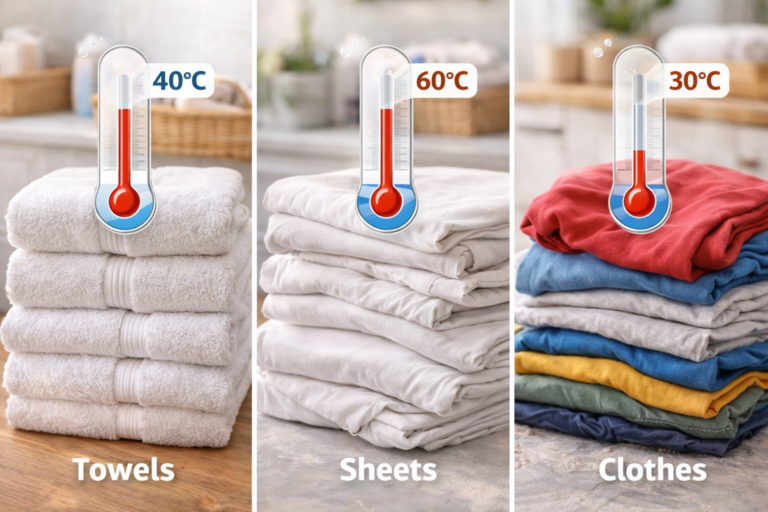
Water temperature is one of the most important laundry decisions you make — it affects how well your clothes get cleaned, how long fabrics last, and how much the wash cycle costs to run. Yet most people either always use cold or always use whatever the machine defaults to.
Here’s a practical guide to wash temperature for every common laundry type.
The Quick Reference Guide
Hot water (60°C / 140°F and above)
- White cotton towels and washcloths
- Bed sheets and pillowcases (especially for allergy sufferers)
- Underwear and socks
- Kitchen towels and dishcloths
- Items belonging to someone who’s been ill
- Heavily soiled work clothes or gardening clothes
Warm water (40°C / 104°F)
- Colored cottons and everyday t-shirts
- Jeans and casual trousers
- Synthetic fabrics (polyester, nylon, acrylic)
- Lightly soiled items that need more than a cold rinse
- Most everyday laundry — the safe middle ground
Cold water (30°C / 86°F or below)
- Dark colors and brights (prevents fading and color bleed)
- Wool and cashmere
- Silk and delicates
- Lightly soiled everyday items
- Anything you want to preserve the shape and color of
Towels: What Temperature?
Wash towels on warm to hot — a minimum of 40°C and ideally 60°C for white towels or towels used by people with compromised immune systems. Towels harbor bacteria, dead skin cells, and body oils that cold water and detergent alone don’t reliably kill.
For colored towels, 40°C is a good compromise between cleaning power and color preservation. If your towels have developed a musty smell, hot wash at 60°C is part of the fix.
The one thing not to do: regularly washing towels on cold. It keeps them technically clean of surface dirt but doesn’t address the bacterial load, which is why cold-washed towels tend to develop mildew smell faster.
Bed Sheets: What Temperature?
60°C is the recommended temperature for bed sheets if you want to kill dust mites and bacteria effectively. This matters most for allergy and asthma sufferers — dust mites die at temperatures above 55°C and are a significant allergen trigger.
For everyday sheet washing with no specific health concerns, 40°C is fine and more fabric-friendly for colored or patterned sheets. Just wash more frequently — every 1 to 2 weeks — if you’re washing at the lower temperature.
White cotton sheets can handle 90°C occasionally if they need a deep sanitizing clean, but regular 90°C washing will degrade the fabric over time.
| Allergy Tip If someone in your household has dust mite allergies, washing all bedding at 60°C or above once a week is one of the most effective interventions you can make. Pair this with allergen-proof mattress and pillow covers for best results. |
Everyday Clothes: What Temperature?
T-shirts and casual tops
30 to 40°C for colored items. Cold wash if the colors are vivid or you’re concerned about fading. Hot wash only for white cotton t-shirts that need deep cleaning.
Jeans
Cold wash, inside out. Jeans fade fastest from heat and agitation. Cold water extends the life of the dye significantly. Wash infrequently — every 5 to 10 wears for most jeans.
Synthetic sportswear
Cold to warm (30 to 40°C). High heat damages elastic fibers and synthetic fabrics. Turn inside out, as most bacteria accumulate on the inner surface. Consider a sports-specific detergent for persistent odor.
Underwear and socks
Warm to hot (40 to 60°C). These items have the highest bacterial load of any laundry and benefit from higher temperatures. Most modern underwear fabrics handle 40 to 60°C without issue.
Wool and cashmere
Cold only, always. Never warm or hot. Wool felts — the fibers lock together irreversibly — when exposed to heat and agitation. Use a wool-specific detergent and the delicate cycle.
Silk
Cold only, hand wash preferred. Silk is protein-based like wool and can be damaged by heat. Hand wash in cold water with a delicate detergent, or use the coldest and most gentle machine cycle available.
Does Washing Temperature Affect Cleaning Power?
Yes — significantly. Hot water dissolves detergent more effectively, breaks down oils and grease better, and kills more bacteria and dust mites. For heavily soiled items and hygiene-sensitive laundry, higher temperatures genuinely clean better.
However, for lightly soiled everyday clothes, modern detergents are formulated to work well in cold water and the difference in cleaning outcome is minimal. Cold washing for everyday laundry is a perfectly reasonable choice that saves energy without sacrificing much cleaning performance.
Frequently Asked Questions
Does cold water shrink clothes?
Cold water does not shrink clothes. Shrinkage is caused by heat — either hot water or high dryer temperatures — which causes natural fibers like cotton and wool to contract. Cold water is the safest choice for preventing shrinkage.
Is it better to wash on cold or warm?
For most everyday laundry, cold is fine and saves energy. For anything that needs bacteria killed — towels, sheets, underwear, items worn during illness — warm to hot is meaningfully more effective. The right answer depends on what you’re washing.
Can you wash everything on 30 degrees?
For lightly soiled everyday clothing, yes. For towels, bedding, underwear, and heavily soiled items, 30 degrees won’t deliver adequate cleaning and sanitizing. A blanket cold-wash-everything approach saves energy but compromises hygiene on items that need more.
What temperature kills bacteria in laundry?
Most bacteria are killed at 60°C (140°F). Dust mites die above 55°C (131°F). For effective sanitizing of bedding and towels, 60°C is the practical target. Some commercial laundry settings use 90°C for full sterilization, but this is rarely necessary or practical for home laundry.
The Bottom Line
Use hot (60°C) for towels, bedding, underwear, and anything that needs sanitizing. Use warm (40°C) for everyday colored cottons and casual clothing. Use cold for darks, delicates, wool, silk, and lightly soiled items where color and fabric preservation matter more than deep cleaning. And for energy savings, cold is perfectly fine for most everyday laundry — just reserve warm and hot cycles for the items that genuinely need them.
Related Articles:
- What Is the Kenmore Sanitize Cycle? A Deep-Clean Option for Germ-Free Laundry
- What Is the Samsung Activewear Cycle? Here’s How It Works and When to Use It
- What Is the Kenmore Sanitize Cycle? A Deep-Clean Option for Germ-Free Laundry
