
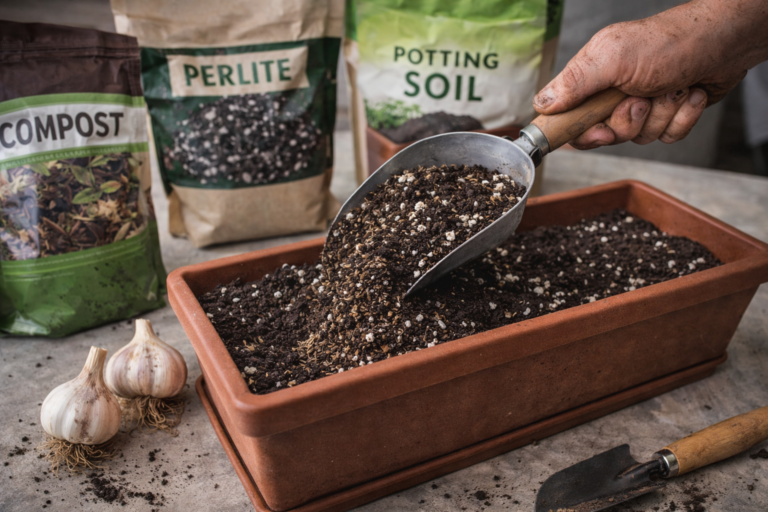
Getting the soil right is one of the most important steps to growing large, healthy garlic bulbs. Garlic needs loose, nutrient-rich soil that drains well but still holds enough moisture to support root and bulb development.
The best soil mix for garlic combines organic matter, good drainage, and balanced nutrients. A high-quality potting mix amended with compost and optional sand or perlite creates ideal conditions for strong growth.
Below you will learn exactly how to choose or build a soil mix that produces the biggest garlic bulbs.
Why Soil Mix Matters for Garlic
Garlic bulbs develop underground, so the soil structure directly affects how large those bulbs can grow. Soil that is too heavy, compacted, or waterlogged limits root expansion and reduces bulb size.
The right mix:
- Ensures good drainage
- Holds nutrients where roots can access them
- Allows roots to expand freely
- Supports moisture regulation
Healthy soil leads to healthy garlic.
What Basic Soil Characteristics Garlic Needs
Garlic prefers:
- Loose, crumbly texture
- Well-draining conditions
- pH between 6.0 and 7.0
- Moderate fertility
Soil outside this range can still work, but adjusting texture and pH improves bulb size and storage life.
Ideal Soil pH
Garlic performs best in soil with a pH between 6.0 and 7.0. Slightly acidic to neutral soil encourages nutrient availability and stronger root development. If soil is too acidic or alkaline, consider a soil test and adjust with lime or sulfur.
How to Build a Powerful Garlic Soil Mix
Whether you are planting in containers or in garden beds, the same principles apply.
Base Mix for Garlic
Start with one of the following foundations:
- High-quality garden soil
- Premium potting mix (for containers)
- Raised bed mix
The key is that the base mix is light and loose.
Adding Organic Matter
Organic matter improves soil structure and fertility.
Use:
- Finished compost
- Aged manure
- Worm castings
Mix about 25 to 30 percent organic matter into the base soil. Too much fresh manure can burn roots.
Improving Drainage
If soil clogs easily or stays soggy after rain or watering, add drainage help.
Use:
- Coarse sand
- Perlite
- Rice hulls
Adding 10 to 20 percent drainage material loosens the mix and prevents waterlogging.
Adjusting for Containers
For container garlic, a good soil mix is essential because potting soil alone often holds too much moisture.
A balanced container mix might include:
- 40 percent potting soil
- 30 percent compost
- 20 percent perlite or coarse sand
- 10 percent worm castings (optional)
This blend improves drainage and fertility while keeping the soil light.
Should You Use Garden Soil?
Garden soil can work if it is loose and well-draining. If you have heavy clay or compacted soil, avoid using straight garden soil for garlic or containers.
Amending heavy soil with at least 40 percent organic matter and drainage helpers transforms it into a garlic-friendly mix.
Fertilizer and Soil Nutrition
Garlic prefers moderate fertility. Too much nitrogen late in the season can push leaves at the expense of bulb growth.
When to Fertilize
- Before planting: Mix compost into the soil
- Early growth: Apply a balanced or nitrogen-rich feed
- Bulb formation stage: Reduce nitrogen-heavy feeding
Balanced soil nutrition results in stronger leaves early and fuller bulbs later.
How Soil Affects Bulb Size and Storage
Soil that drains well and holds nutrients encourages:
- Larger bulb size
- Stronger wrapper layers
- Better storage life
Bulbs grown in poorly draining or compacted soil often remain small and do not store well.
Final Thoughts
The best soil mix for growing garlic is loose, nutrient-rich, and well-draining. Whether you are planting in your garden or containers, starting with lightweight soil amended with compost and optional sand or perlite improves bulb size and quality.
Good soil is the foundation of a strong garlic harvest. Invest in the mix first, and the bulbs will follow.
Frequently Asked Questions
Can I use potting soil alone to grow garlic?
Potting soil can work, but it often holds too much moisture. Amending it with compost and drainage materials produces better results.
What if my soil is mostly clay?
Clay soil should be improved with organic matter and drainage helpers before planting. Garlic does not tolerate compacted soil.
Does garlic need fertilizer in addition to good soil?
Yes. Good soil provides the foundation, but light early feeding and balanced nutrition support larger bulbs.
How do I test soil pH?
Soil pH can be tested with a home kit or by sending a sample to an extension lab. Adjust pH with lime to raise it or sulfur to lower it as needed.
Related Articles:
- When to Harvest Garlic for Maximum Size
- 7 Mistakes That Make Garlic Bulbs Small
- How to Grow Garlic in Containers on a Balcony
