
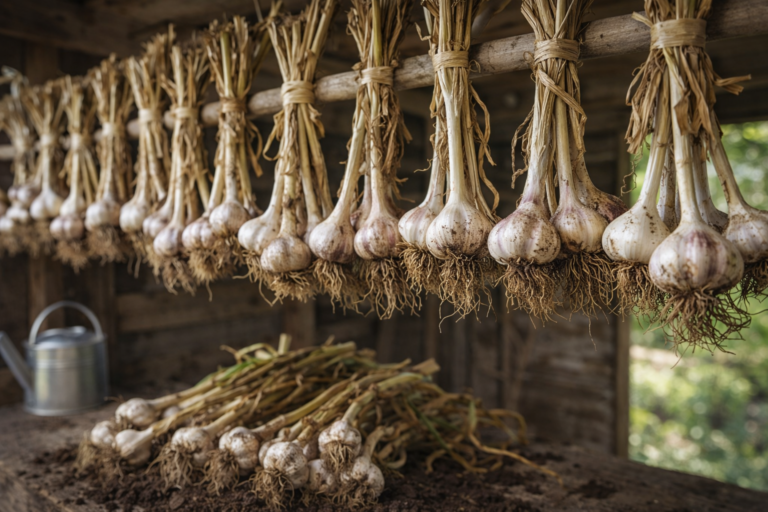
If you want garlic to last for months without sprouting or rotting, curing is not optional. It is essential.
To store garlic for up to eight months, harvest at the right time, keep bulbs unwashed, dry them in a shaded and well-ventilated area for two to three weeks, then trim and store them in a cool, dry place with airflow. Proper curing strengthens the outer wrappers and protects the cloves inside.
Below, you will learn exactly how to cure garlic step by step so it stores safely and maintains flavor.
Why Curing Garlic Is So Important
Freshly harvested garlic contains high moisture. If stored immediately, that moisture encourages mold, rot, and early sprouting.
Curing allows:
- Excess moisture to evaporate
- Outer skins to dry and tighten
- Flavor to fully develop
- Storage life to increase significantly
Well-cured garlic can last six to eight months under proper storage conditions.
Step 1: Harvest Garlic at the Right Time
Curing success begins at harvest.
Garlic should be harvested when:
- Lower leaves have turned brown
- Upper leaves remain partly green
- About half the leaves are dry
If harvested too early, bulbs may not store well. If harvested too late, bulbs may split and lose protective layers.
Step 2: Do Not Wash the Bulbs
After harvesting:
- Gently shake off loose soil
- Do not wash the bulbs
- Keep roots and stems attached during curing
Washing introduces moisture and increases the risk of rot during the drying process.
Step 3: Choose the Right Curing Location
Garlic should be cured in a space that is:
- Dry
- Shaded
- Well-ventilated
- Protected from rain and direct sunlight
Direct sunlight can damage bulbs and reduce storage life.
Garages, sheds, covered patios, or indoor rooms with airflow work well.
Step 4: How to Cure Garlic Properly
There are two common methods.
Hanging Method
Bundle several plants together and hang them upside down. This allows air to circulate around the bulbs evenly.
Laying Flat Method
Lay bulbs in a single layer on a rack or mesh surface to allow airflow above and below.
In both methods, avoid stacking bulbs on top of each other.
Curing usually takes 2 to 3 weeks. In humid climates, it may take slightly longer.
How to Know When Garlic Is Fully Cured
Garlic is ready when:
- Outer skins are dry and papery
- Stems are fully dry and stiff
- Roots appear shriveled
- Bulbs feel firm
If the neck area still feels moist or soft, allow more drying time.
Step 5: Trim and Prepare for Storage
After curing:
- Cut roots close to the bulb
- Trim stems, leaving about 1 to 2 inches
- Gently brush off remaining dry soil
Do not remove too many outer skins. They protect the cloves.
Best Storage Conditions for 8 Month Shelf Life
Proper curing is only half the process. Storage conditions matter just as much.
Store garlic in:
- A cool location
- A dry environment
- A dark space
- A container with airflow, such as mesh bags or baskets
Ideal storage temperature is cool but not cold. Avoid refrigeration, as cold temperatures can trigger sprouting.
High humidity increases mold risk, so ensure good air circulation.
What Shortens Garlic Storage Life?
Several mistakes reduce storage duration:
- Storing garlic before it is fully cured
- Refrigerating whole bulbs
- Storing in sealed plastic containers
- Keeping in humid environments
- Allowing bulbs to become bruised during harvest
Avoid these issues to maximize shelf life.
Can You Store Garlic Longer Than 8 Months?
Some softneck varieties may store longer under ideal conditions. However, most home-grown garlic will maintain best quality within six to eight months.
As bulbs age, they gradually lose moisture and flavor strength.
Final Thoughts
Curing garlic properly is the key to long-term storage. Harvest at the right time, keep bulbs dry, allow two to three weeks of curing in a shaded and ventilated area, then store in a cool, dry place with airflow.
Do this correctly, and your garlic can last through winter and beyond without sprouting or rotting.
Frequently Asked Questions
Can you cure garlic in direct sunlight?
No. Direct sunlight can overheat bulbs and damage outer skins. Always cure garlic in a shaded area with good airflow.
What happens if garlic is not cured long enough?
If garlic is stored before fully curing, excess moisture can cause mold, rot, or early sprouting.
Should you remove the outer layers before storage?
No. The outer papery layers protect the cloves and extend storage life. Only remove loose or heavily damaged skins.
Can you cure garlic indoors?
Yes. As long as the room is dry and well-ventilated, indoor curing works well. Avoid humid kitchens or closed spaces without airflow.
Related Articles:
- When to Harvest Garlic for Maximum Size
- 7 Mistakes That Make Garlic Bulbs Small
- How to Grow Garlic at Home From Store-Bought Cloves and Never Buy It Again
